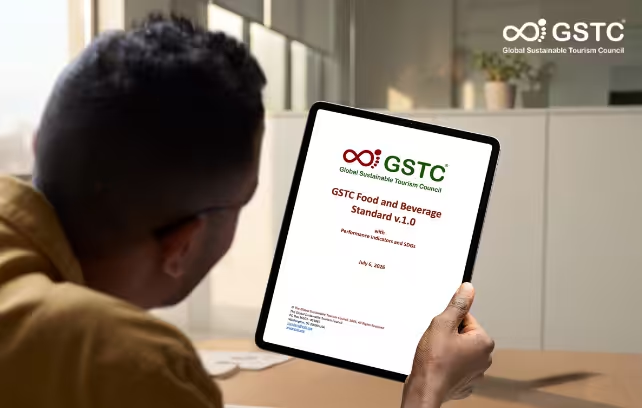
GSTC publishes new Food and Beverage Standard
The Global Sustainable Tourism Council (GSTC) has officially published its new Food and Beverage Standard, expanding its suite of sustainability frameworks across the tourism industry.
Purpose of the Standard
- Designed to guide food and beverage service providers in tourism toward more sustainable practices.
- Offers a common framework for businesses, governments, and certification bodies to measure and improve sustainability.
- Aligns with the UN Sustainable Development Goals (SDGs), addressing economic, environmental, social, and cultural dimensions.
Key Features
- Organized around GSTC’s four pillars: sustainable management, socioeconomic impacts, cultural impacts, and environmental impacts.
- Provides minimum requirements for businesses to achieve credible sustainability performance.
- Supports education, training, and awareness-raising for tourism stakeholders.
- Encourages practices like local sourcing, waste reduction, resource efficiency, and cultural heritage preservation.
Development Process
- Took place over 24 months (June 2024 – June 2026), with multiple rounds of consultation and feasibility assessments.
- Involved contributions from organizations such as Culinary Tourism Alliance, Lever Foundation, Pan Pacific Hotels Group, Six Senses Bangkok, and Sustainable Restaurant Associations in Japan and the UK.
- Finalized after public consultations and consensus-building.
Leadership Insight
Randy Durband, CEO of GSTC, noted: “The food and beverage service sector is everywhere in the tourism value chain, and the development of the GSTC Food and Beverage Standard marks another meaningful step in expanding the application of global sustainability standards across the tourism industry.”
This new standard complements existing GSTC frameworks for Hotels, Tour Operators, Destinations, MICE, and Attractions, making it the sixth set of global sustainability standards.
Follow us on Insta