Air Canada Reports First Quarter 2026 Financial Results
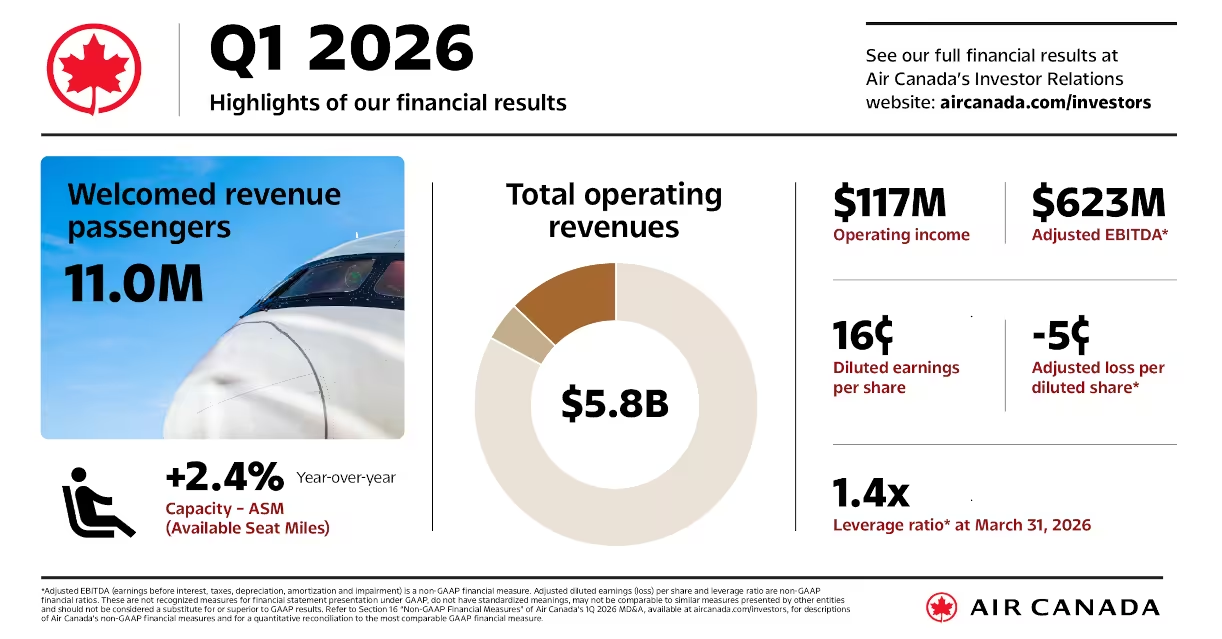
Air Canada today reported its financial results for the first quarter of 2026 and provided financial guidance for the second quarter 2026. Given the volatility and uncertainty in relation to jet fuel prices for the second half of the year, Air Canada has suspended its full‑year 2026 financial guidance. Key Financial Highlights - Operating revenues: C$5.8 billion (up 11% year-over-year) - Operating income: C$117 million (a swing of +C$225 million vs. Q1 2025) - Adjusted EBITDA: Record C$623 million (+61% YoY) - Net income: C$48 million (vs. a loss of C$102 million in Q1 2025) - Free cash flow: C$1.6 billion (nearly double last year’s C$831 million) - Net debt: C$4.86 billion, leverage ratio 1.4x Operational Metrics - Passenger load factor: 86.1% (up 4 points from 82.0%) - Revenue passengers carried: 10.96 million (+5.6%) - Available seat miles (ASMs): 24.8 billion (+2.4%) - Passenger yield: 22.4¢ per RPM (+2.9%) Guidance & Outlook - Full-year 2026 guidance suspended due to jet fuel price volatility linked to Middle East conflicts. - Q2 2026 guidance: Adjusted EBITDA expected between C$575–725 million, with capacity growth of 0.5–1%. - Air Canada aims to offset 50–60% of incremental fuel costs through hedging and cost actions. Long-Term Targets (2028–2030) - Revenue goal: ~C$30 billion by 2028, exceeding C$30 billion by 2030. - Adjusted EBITDA margin: ≥17% by 2028, 18–20% by 2030. - Free cash flow margin: ~5%. - Return on invested capital: ≥12% by 2030. Overall, Air Canada is showing resilient demand and strong cash generation, but fuel price volatility remains the biggest risk factor for the rest of 2026.
Follow us on Insta