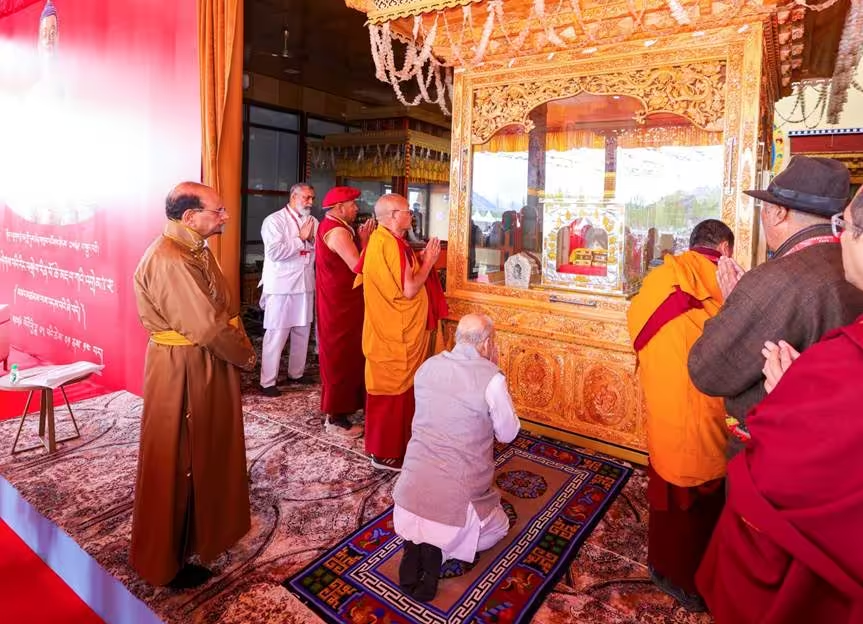
Union Minister Amit Shah inaugurates the exposition of the sacred relics of Lord Buddha in Leh
Union Home Minister and Minister of Cooperation Shri Amit Shah inaugurated the exposition of the sacred relics of Lord Buddha in Leh. Historic Occasion - The relics of Lord Buddha have returned to Ladakh after 75 years, coinciding with Buddha Purnima. - Shri Amit Shah described it as a “historic and truly golden occasion,” symbolizing both a religious and cultural reunion. Key Messages from the Address - Timeless relevance: Even after 2,500 years, Buddha’s wisdom remains vital for the world. - Middle Path: Indian culture and Buddha’s teachings emphasize dialogue and balance as solutions to conflict. - Ladakh’s role: Called a “living laboratory of Buddhist culture and compassion,” Ladakh has preserved and propagated Buddhist knowledge through centuries. - Four traditions: Nyingma, Kagyu, Sakya, and Gelug have shaped Ladakh’s spiritual identity, emphasizing knowledge, practice, moral discipline, and reflection. Historical Context - Buddhism reached Ladakh via Ashoka’s envoys, flourished during the Kushan period (1st–3rd centuries), and expanded through the Silk Route. - Between the 7th–10th centuries, Mahayana and Vajrayana traditions enriched Ladakh’s spiritual landscape. - By the 10th–11th centuries, Sanskrit texts were translated into Tibetan, and 108 monasteries were established, including the Alchi Monastery. Global Significance - Ladakh’s Buddhist heritage is recognized worldwide; Mahayana literature equates viewing relics with the darshan of Buddha himself. - The exposition reinforces India’s civilizational message of peace, coexistence, and compassion, especially relevant in diverse regions like Ladakh and Kargil. This event is being framed not just as a religious milestone but as a cultural and diplomatic gesture, highlighting India’s role as a custodian of Buddhist heritage and its message of peace.
Follow us on Insta