Protection and Conservation of Monuments in India
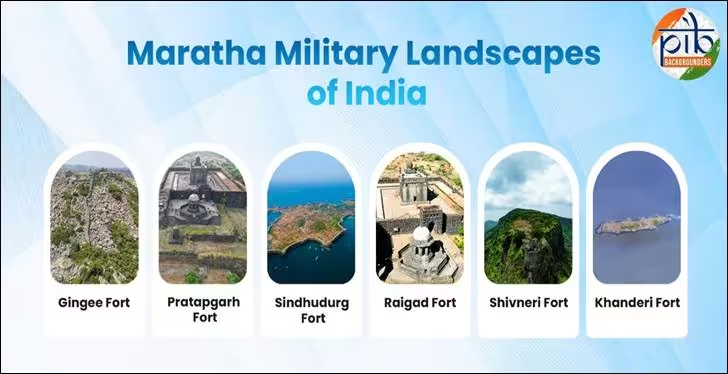
India’s cultural landscape is shaped by monuments, antiquities, manuscripts and historic sites that together reflect thousands of years of civilisational evolution. These structures and objects are not merely remnants of the past; they represent collective memory, inherited knowledge and a sense of continuity that binds generations. Key Facts - The Archaeological Survey of India (ASI) safeguards 3,686 centrally protected monuments, supported by scientific restoration and conservation systems. - India now has 44 UNESCO World Heritage Sites, with the Maratha Military Landscapes added in 2024. - Conservation expenditure for 2024–25 was ₹374 crores, reflecting the scale of ongoing preservation efforts. Legislative Framework - Article 49: Duty of the State to protect monuments of national importance. - Seventh Schedule: Division of responsibilities between Centre (national monuments) and States (regional monuments). - Article 51A(f): Fundamental duty of citizens to preserve India’s heritage. - AMASR Act, 1958 & National Policy (2014): Provide structured guidelines for scientific conservation, minimal intervention, and community participation. Institutional Framework - ASI: Established in 1861, principal body for archaeological research and conservation. Operates via 38 Circles across India. - National Mission on Monuments and Antiquities (NMMA): Builds national databases; documented 11,406 heritage sites and 12.48 lakh antiquities. Emerging Approaches - Adopt a Heritage 2.0: Public–private partnerships upgrading visitor amenities at sites like Agra Fort, Qutub Minar, and Ajanta Caves. - Technology Integration: LiDAR, GIS mapping, drones, 3D scanning, photogrammetry, and AI for documentation and diagnostics. - Cultural Festivals: Konark Dance Festival, Khajuraho Dance Festival, and others link heritage with tourism and local livelihoods. - Museum Grant Scheme: Supports digitisation, modernisation, and skill development for museum professionals. Case Study – Kedarnath Temple After the 2013 disaster, ASI and IIT Chennai collaborated using geophysical testing (MASW) to assess structural stability. Restoration combined scientific diagnostics with traditional craftsmanship, ensuring non-invasive conservation. Global Recognition India’s UNESCO portfolio: 36 Cultural, 7 Natural, 1 Mixed site. The growing list strengthens India’s global heritage profile and cultural diplomacy. Conclusion India’s conservation strategy blends scientific methods, legal safeguards, community participation, and digital innovation. Heritage is treated not just as a legacy but as a living developmental asset, linking preservation with tourism, livelihoods, and global cultural leadership.
Follow us on Insta