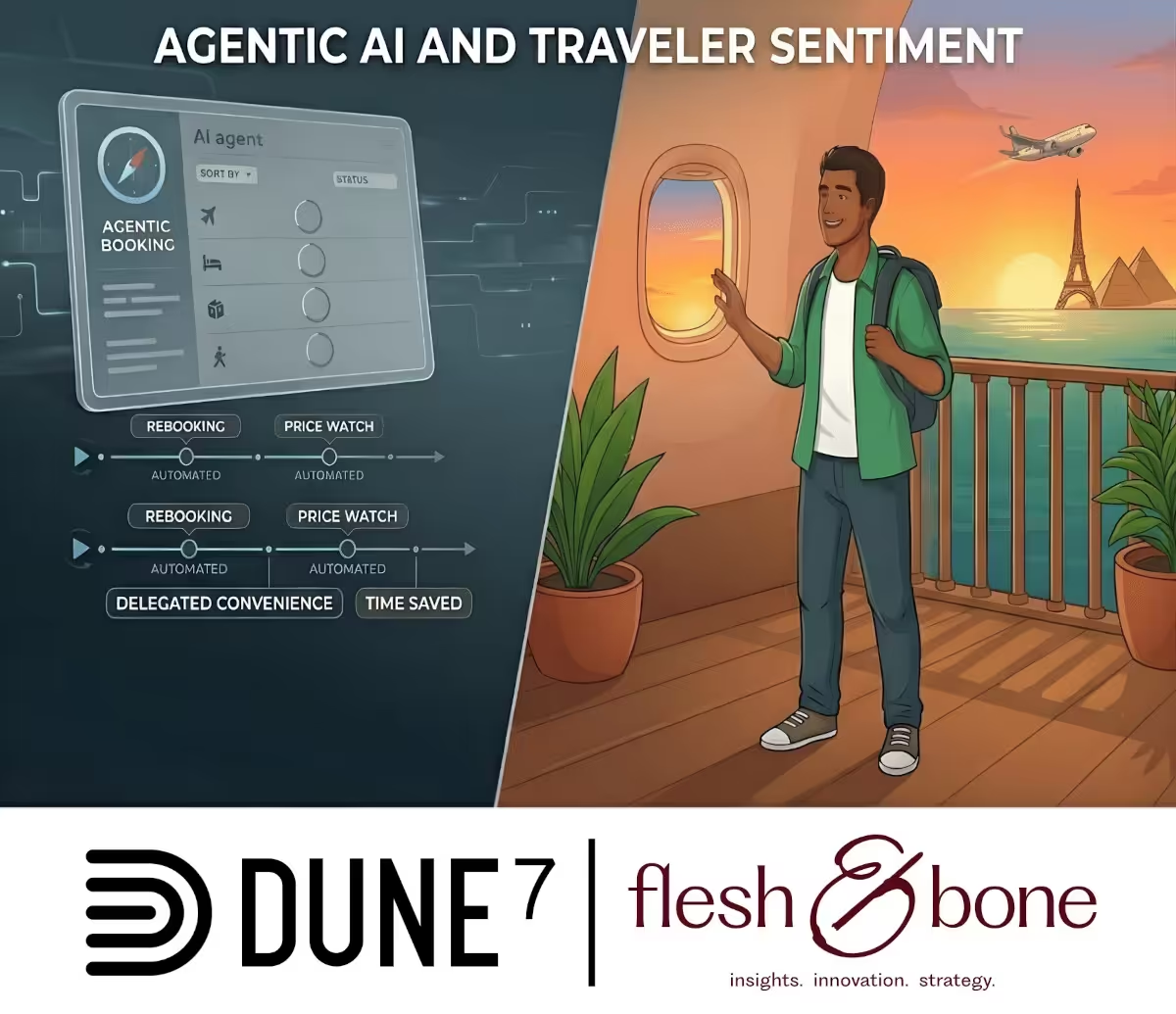
New Study Finds Travelers Are Open to Booking With AI, but Only With Clear Guardrails
The new study from Dune7 and Flesh & Bone shows travelers are increasingly open to letting AI book their trips, but only if clear guardrails are in place. Strong interest: 71% of U.S. adults surveyed (who flew in the past year) said they’d consider using an AI travel assistant to search, compare, select, and book travel. Top use cases: Booking hotels (66%), flights (65%), and personalized packages (61%). Perceived benefits: Saving time, finding better deals, and handling disruptions in real time. Biggest concerns: - Errors that are hard to reverse - Unclear accountability if something goes wrong - Lack of human support - Data privacy Adoption Trends - Interest is highest among Millennials, business travelers, international travelers, and current AI users — groups with more complex travel needs. - The study suggests these segments may be the earliest adopters of agentic AI booking. Industry Implications Tom Buckley, cofounder at Dune7, summed it up: “The market is not saying ‘don’t let AI book for me.’ It is saying, ‘let AI do the work — but inside rules I set, with approval rights, transparency, and a human fallback when it matters.’” For travel brands, the takeaway is clear: automation alone isn’t enough. Success will come from combining AI efficiency with trust, transparency, and human recourse.
Follow us on Insta