Life in Australia: A Guide for International Students
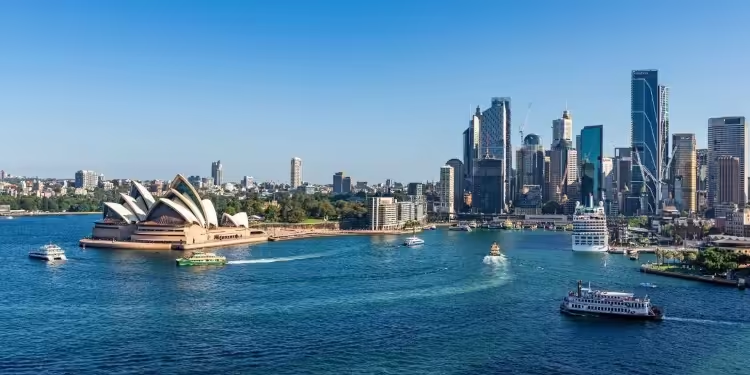
Moving to a new country is a journey filled with excitement and offers endless opportunities. For many international students, Australia becomes more than a study destination, — it becomes a second home. Culture & Everyday Norms - Australia is a multicultural society built on respect, fairness, and inclusiveness. - Etiquette matters: say thank you, respect queues, let passengers exit before boarding, and keep noise low on public transport. - Diversity in race, gender, and orientation is widely accepted, easing culture shock. Academic Life - Universities encourage active participation, critical thinking, and collaboration. - Support includes English language help, writing workshops, and peer mentoring. - Campus life is vibrant with clubs, societies, and cultural festivals. Working While Studying - Student visas often allow part-time work under certain conditions. - Essentials before working: - Register for a Tax File Number (TFN) - Open an Australian bank account (CommBank, NAB, Westpac, ANZ) - Link accounts properly to avoid tax issues - Jobs can be found via SEEK, Indeed, Workforce Australia, or campus services. Safety & Wellbeing - Emergency number: 000 - Universities provide counselling, health programs, and advocacy. - Safety tips: avoid walking alone late at night, lock doors, safeguard belongings. Managing Finances - Students must show proof of funds for visa approval. - Living costs include accommodation, transport, food, and course expenses. - Part-time work helps but shouldn’t be the sole source of income. Visa & Health Coverage - Key requirements: - Valid passport - Certificate of Enrolment (CoE) - English test results (IELTS, TOEFL, PTE, CAE, OET) - Proof of funds - Overseas Student Health Coverage (OSHC) – mandatory - Medical exams may be required depending on country of origin. Travel & Arrival - Transport options: taxis, shuttle buses, Skybus, trams, trains. - Sydney offers direct airport-to-city train service. - Packing essentials: seasonal clothing, adaptors, funds, paperwork. - Customs: declare food, plants, animal materials, or cash over AUD 10,000. Accommodation Options - Homestays – cultural immersion, meals included. - Student housing/dorms – close to campus, communal amenities. - Shared accommodation – cost-effective, social but less privacy. - Private rentals – independence but higher costs and responsibility. Transport & Mobility - Melbourne – Myki card, free tram zone in CBD. - Sydney – Opal card for buses, trains, ferries. - Adelaide – MetroCard system. - Cycling is popular but requires helmets. - Driving requires checking licence validity and insurance. Communication & Internet - SIM cards require ID (passport, visa). - Prepaid plans are flexible; contracts better for long stays. - Internet via NBN or wireless broadband (4G/5G). Exploring Australia - Melbourne – arts, street culture, Queen Victoria Market. - Sydney – Opera House, Harbour Bridge, Bondi Beach. - Adelaide – relaxed lifestyle, Central Market, Zoo. - Other regions: tropical beaches, mountains, wine regions, deserts. Final Thoughts Australia offers a secure, inclusive, and enriching environment for international students. With preparation—visa compliance, budgeting, accommodation planning, and cultural awareness—students can thrive academically and personally.
Follow us on Insta