Discerning the nuances of Gaze in Art, Films
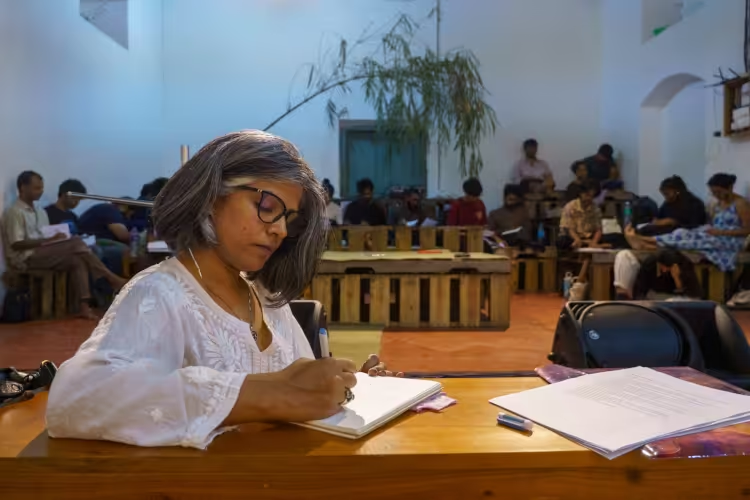
It’s all in the gaze in art and films. The oppositional gaze, the male gaze, the female gaze, black spectatorship, Brahmanical gaze, Bahujan spectatorship and spectator gaze! What “Gaze” Means in Art & Cinema - The Male Gaze (Laura Mulvey): How women are objectified in visual culture, often portrayed for male pleasure rather than as subjects with agency. - The Female Gaze: A counter-narrative that reclaims perspective, focusing on women’s lived experiences and subjectivity. - The Oppositional Gaze (bell hooks): A resistant way of looking, especially by marginalized communities, challenging dominant narratives. - Black Spectatorship: How Black audiences interpret and resist stereotypical portrayals in mainstream cinema. - Brahmanical vs. Bahujan Gaze: In the Indian context, highlighting caste-based perspectives — dominant vs. marginalized ways of seeing. - Spectator Gaze: The act of watching itself, shaped by culture, class, caste, and gender. Key Insights from Jyoti Nisha’s Workshop - She critiques 100 years of Indian cinema for portraying Dalits and marginalized groups as “objects, not subjects.” - Her Ambedkar-oriented gaze emphasizes constitutional values of equality, rationality, and humanity. - She draws from John Berger’s “Ways of Seeing” to show how art historically depicted women for consumption, linking it to film practices. - Her film Dr. B.R. Ambedkar: Now and Then embodies this perspective, weaving lived experiences of Dalit struggles into cinematic narrative. - The workshop encouraged participants to explore creativity through meditation, reading, listening, and scientific empathy — building a community that tells stories to claim space. Why It Matters - Representation: Who gets to look, and who is looked at, defines power in society. - Resistance: Alternative gazes challenge dominant ideologies and open space for marginalized voices. - Creativity: Understanding gaze helps artists and filmmakers consciously shape narratives that are inclusive and transformative. 👉 In essence, “gaze” is not just about looking — it’s about power, perspective, and politics of representation. Jyoti Nisha’s workshop at the Biennale reframed gaze as a tool for social justice and creative liberation.
Follow us on Insta