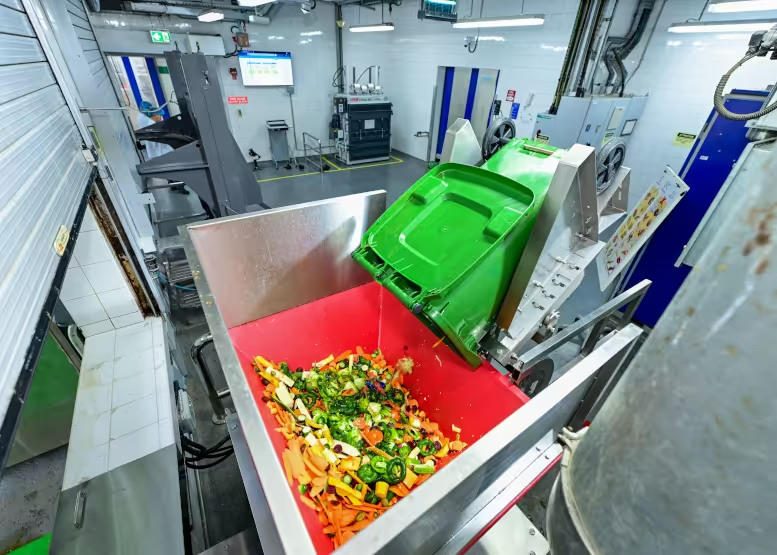
Emirates Flight Catering (EKFC) commissions large-scale biodigester, to reduce annual CO₂ emissions by 2,000 tonnes
Emirates Flight Catering (EKFC) is scaling up its approach to waste management with a custom-built biodigester, one of the largest in commercial scale and capacity. The Power Knot LFC-3000 biodigester at EKFC's Central Commissary Unit enables on-site processing of organic waste, treating it at the source rather than diverting it to landfill. Key Highlights - Project: Installation of a large-scale biodigester at EKFC facilities in Dubai. - Goal: Reduce annual CO₂ emissions by 2,000 tonnes. - Function: The biodigester will process food waste from EKFC’s operations, converting it into greywater and compost-like material. Why It Matters - Environmental Impact: - Cuts methane emissions from landfill disposal. - Supports Dubai’s broader sustainability and waste management goals. - Operational Benefits: - Reduces reliance on traditional waste disposal. - Creates a closed-loop system for food waste management. - Scale: EKFC is one of the world’s largest catering operations, serving over 100 airlines and producing over 200,000 meals daily—making this initiative highly impactful. Broader Context - EKFC has been investing in green technologies, including: - A solar rooftop power project. - Vertical farming through Bustanica, the world’s largest hydroponic farm. - This biodigester complements Emirates Group’s wider sustainability strategy, aligning with UAE’s Net Zero 2050 vision. This move positions EKFC as a pioneer in aviation catering sustainability, showing how large-scale food operations can meaningfully reduce emissions while supporting circular economy practices.
Follow us on Insta