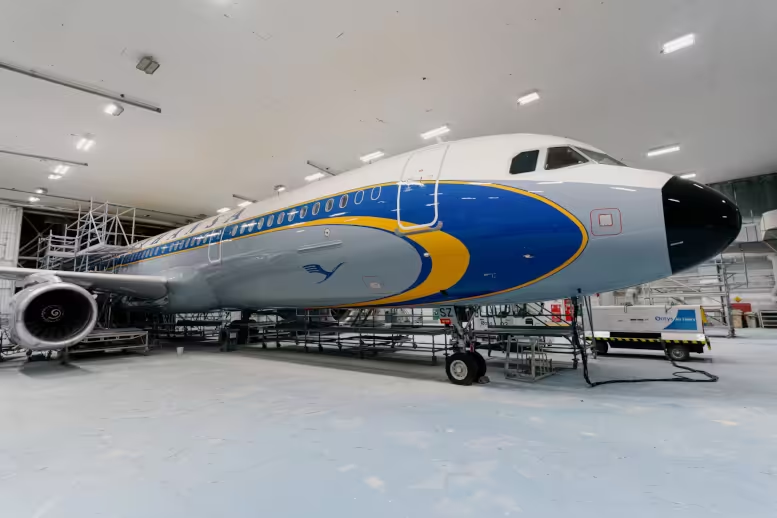
Lufthansa flies in historic parable design
To mark the 100th anniversary of Lufthansa's founding, another specially painted aircraft is expected in Frankfurt today: an Airbus A321-200 was painted in Norwich, England, in the design of the legendary Lockheed Super Star and will fly from there to Germany's largest airport under flight number LH9898. What "Historic Parable Design" Refers To - Retro Liveries: Airlines sometimes repaint aircraft in designs from earlier eras to celebrate milestones or anniversaries. Lufthansa has a tradition of showcasing heritage liveries that connect to its mid-20th century branding. - Parable Motif: The term “parable design” suggests a storytelling element—a design that symbolizes Lufthansa’s journey, values, or aviation history. It could be referencing stylized graphics, typography, or motifs from its early fleet. - Cultural Resonance: Such liveries are not just aesthetic; they serve as flying ambassadors, reinforcing brand identity and nostalgia among passengers and aviation enthusiasts. Why Airlines Do This - Anniversaries & Heritage: Lufthansa often marks anniversaries (e.g., 100 years of aviation in Germany, fleet milestones) with retro designs. - Public Engagement: Retro aircraft generate buzz on social media and among aviation fans. - Brand Continuity: It ties the airline’s modern operations to its historic roots, reinforcing trust and tradition. Broader Context - Other airlines like British Airways, Qantas, and KLM have also flown retro liveries to celebrate heritage. - Lufthansa’s move fits into a wider trend of airlines using design storytelling to differentiate themselves in a competitive market. In short: Lufthansa’s “historic parable design” is likely a retro-inspired aircraft livery that visually narrates the airline’s heritage, blending nostalgia with modern branding.
Follow us on Insta