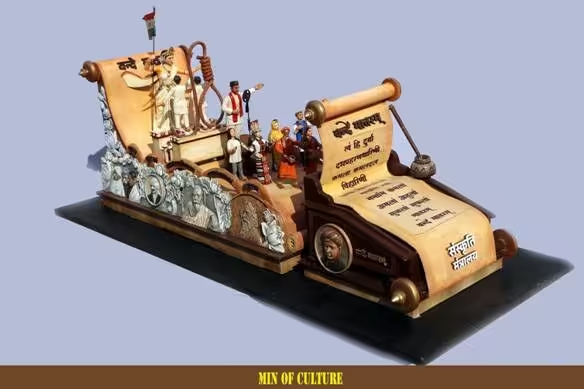
Ministry of Culture to Present Republic Day Tableau 2026 on ‘150 Years of Vande Mataram’
The Ministry of Culture will present a tableau on the theme ‘150 Years of Vande Mataram’ at the Republic Day Parade 2026, foregrounding the national song as a living expression of India’s civilisational memory, collective consciousness, and cultural continuity. Theme - “150 Years of Vande Mataram” — commemorating the national song as a living expression of India’s civilisational memory, collective consciousness, and cultural continuity. Historical Significance - Composed in 1875 by Bankimchandra Chattopadhyay, envisioning the nation as Mother — sujalam, suphalam (abundant in nature and strength). - Sung by revolutionaries in prisons, meetings, and processions during the freedom struggle. - Sri Aurobindo described it as a spiritual force capable of awakening collective consciousness. - Vishnupant Pagnis’s rendition in Raga Sarang, with altered verses to bypass colonial censorship, became a symbol of artistic resistance. Tableau Highlights - A moving tractor carrying the original manuscript of Vande Mataram. - Folk artists from across India, representing cultural plurality. - Gen-G (present generation) performing Vande Mataram, inspired by historic renditions. - Designed and executed by the Indira Gandhi National Centre for the Arts (IGNCA), which has been entrusted with this responsibility since 2021. Broader Message - Republic Day tableaux are not just ceremonial displays but moving archives of civilisational memory. - The Ministry of Culture’s approach integrates philosophical, historical, and cultural dimensions, reaffirming that culture is the sustaining spirit of the Republic. - The 2026 tableau connects the memory of the freedom struggle with the responsibilities of the present and aspirations of the future. This tableau is designed to remind citizens that Vande Mataram is more than a song — it’s a symbol of unity, courage, and cultural depth that continues to resonate across generations.
Follow us on Insta