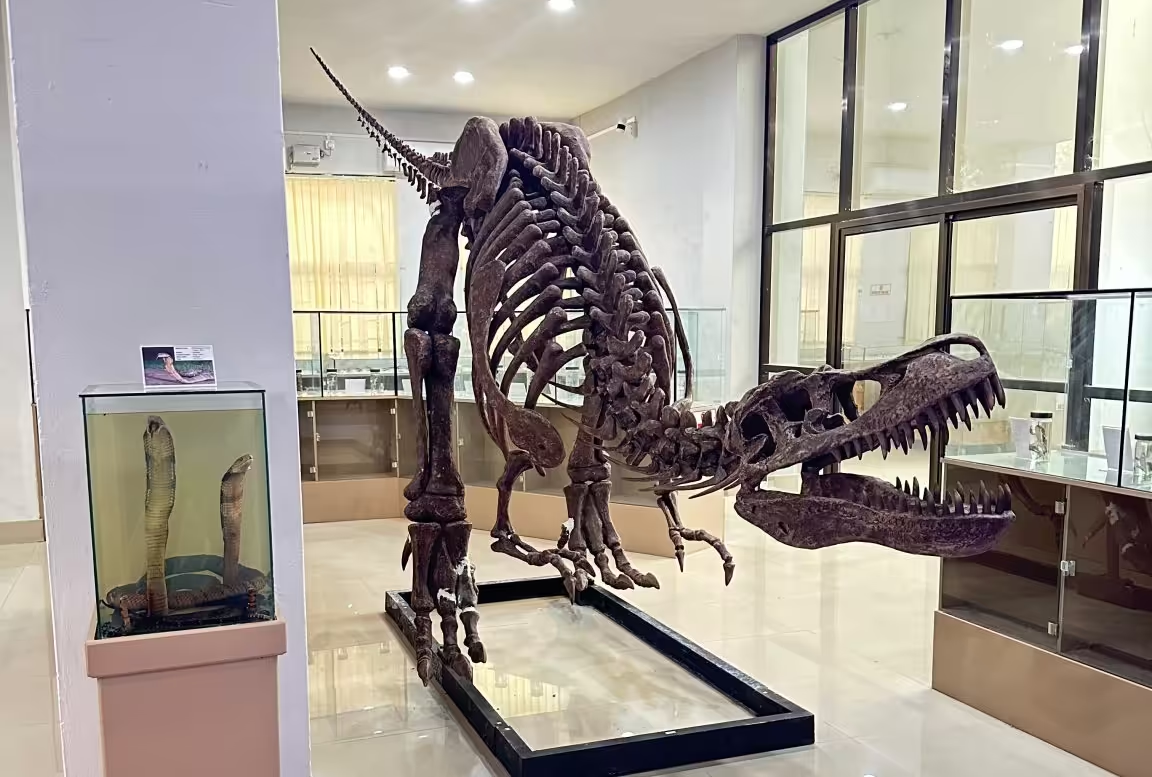
Mizoram’s Natural History Museum notified as India’s 21st Designated Repository under Biological Diversity Act, 2002
The Natural History Museum (NHM), Mizoram University, Aizawl has officially been notified as India’s 21st Designated Repository under the Biological Diversity Act, 2002. This designation, announced on 19 June 2026, is a major boost to biodiversity conservation and scientific documentation in the Indo-Burma Biodiversity Hotspot.
Key Roles of NHM
- Voucher Specimens: Preserving authenticated collections of flora (pteridophytes, macrofungi) and fauna (reptiles, amphibians, fishes, moths, beetles, butterflies).
- Type Specimens: Serving as the official depository for newly discovered species from the region.
- Scientific Infrastructure: Strengthening species identification, traceability, and ecological restoration efforts.
Why Mizoram Matters
- Located in the Indo-Burma Biodiversity Hotspot, one of the world’s richest ecosystems.
- Northeast India harbors 7,500+ flowering plant species and 2,000+ faunal species.
- Recent discoveries like Leptobrachella tamdil highlight the region’s global importance for species discovery.
Institutional Strengths
- Established in 2022 under Mizoram University (a Central University).
- Already preserved 500+ specimens before designation.
- Multidisciplinary team covering seven taxonomic groups.
- Collaborates with the Mizoram State Biodiversity Board and regional research institutions.
National & Global Significance
- Complements repositories like the Botanical Survey of India and Zoological Survey of India.
- Advances National Biodiversity Target 4 (2024–2030) on ex situ conservation.
- Aligns with the Kunming–Montreal Global Biodiversity Framework for genetic diversity conservation.
This designation not only strengthens India’s biodiversity governance but also ensures that specimens are preserved closer to their source, reducing logistical challenges and enhancing regional scientific collaboration.
Follow us on Insta