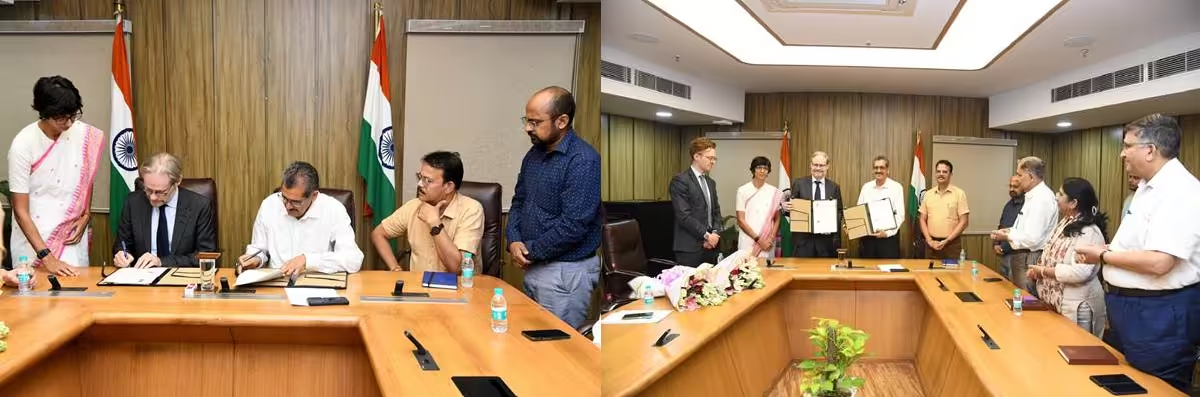
ASI and National Museum of Denmark Signed MoU for Underwater Archaeological Investigation of Historic Danish Ship Oresund
The Archaeological Survey of India, Underwater Archaeology Wing and the National Museum of Denmark: Njord - Center for Maritime and Underwater Cultural Heritage, Copenhagen, have signed a Memorandum of Understanding (MoU) to undertake a collaborative underwater archaeological project aimed at locating and documenting the remains of the historic Danish ship Oresund, which was wrecked off the coast near Karaikal, Puducherry, in 1619 CE. Historical Significance - The Oresund was the first Danish ship known to reach India in 1619 CE. - Shortly after arrival, it was wrecked near Karaikal, Puducherry, making it a vital archaeological resource for studying early Indo-Danish maritime interactions and Indian Ocean trade in the 17th century. Collaboration Details - Partners: - Archaeological Survey of India (ASI), Underwater Archaeology Wing - National Museum of Denmark: Njord – Center for Maritime and Underwater Cultural Heritage, Copenhagen - Focus: Non-invasive underwater archaeological survey using advanced technologies and scientific methods. - Aim: To locate and document remains of the Oresund shipwreck. Project Milestone - This is the first international collaborative project for ASI’s Underwater Archaeology Wing. - Marks a step forward in global cooperation for underwater cultural heritage research. Broader Impact - Strengthens academic and scientific ties between India and Denmark. - Promotes documentation, protection, and study of underwater heritage. - Reflects a shared commitment to non-invasive methodologies and sustainable heritage preservation. This initiative not only deepens Indo-Danish cultural ties but also places India’s Underwater Archaeology Wing on the global stage as a serious player in maritime heritage research.
Follow us on Insta