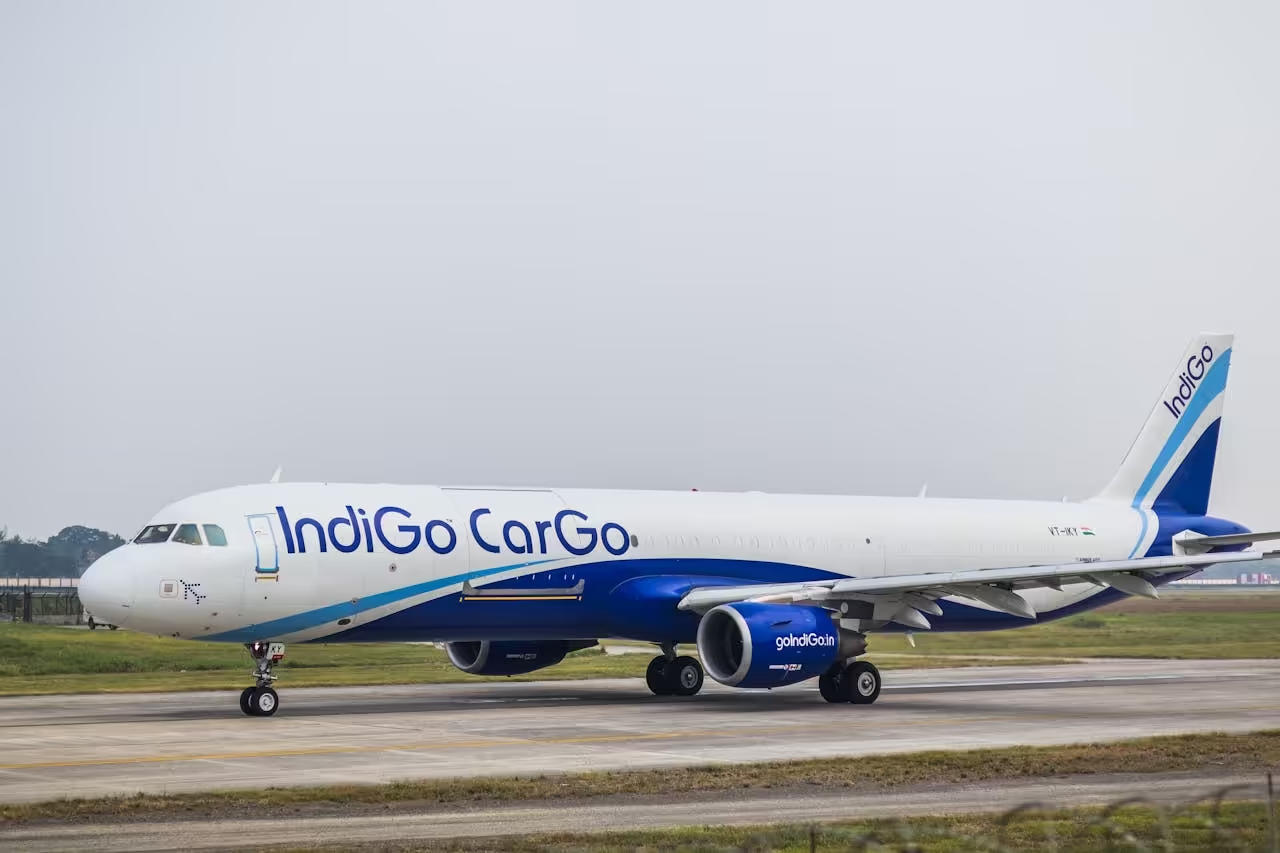
Middle East Disruption Impacts Air Cargo Markets, Demand Falls 4.8% in March
The International Air Transport Association (IATA) released data for March 2026 global air cargo markets. Key Highlights - Global cargo demand fell 4.8% year-on-year in March 2026 (international operations down 5.5%). - Capacity dropped 4.7% globally (international down 6.8%). - The decline was driven mainly by severe disruptions at Gulf hubs due to war in the Middle East, plus the seasonal post–Lunar New Year slowdown. Regional Performance - Middle East: Demand plunged 54.3%, capacity down 52.4% — the weakest globally. - Asia-Pacific: Demand grew 5.4%, capacity up 5.0%. - Africa: Strongest growth, demand up 7.0%, despite capacity falling 4.6%. - Europe: Demand rose 2.2%, capacity up 4.2%. - North America: Demand fell 1.2%, capacity down 1.1%. - Latin America & Caribbean: Demand up 1.8%, capacity up 5.1%. Trade Lane Trends - Africa–Asia: +22.6% growth, continuing strong momentum. - Europe–Asia: +14.2%, marking 37 consecutive months of expansion. - Intra-Asia: +7.5%, resilient regional trade. - Middle East-linked corridors: Severe contraction — Europe–Middle East (-57.6%), Middle East–Asia (-58.6%). Operating Environment - Industrial production: +3.1% YoY in February (38 months of growth). - Global goods trade: +8.0% YoY in February. - Fuel costs: Jet fuel prices surged 106.6% YoY, crude oil up 43.1%, refining margins up 320%. - Manufacturing sentiment: PMI at 51.4, export orders at 50.1 — both above expansion threshold. IATA’s View Willie Walsh, IATA’s Director General, emphasized that while short-term disruptions are sharp, underlying demand remains strong, supported by positive trade and GDP projections. However, fuel supply and pricing are expected to test resilience in the coming months.
Follow us on Insta