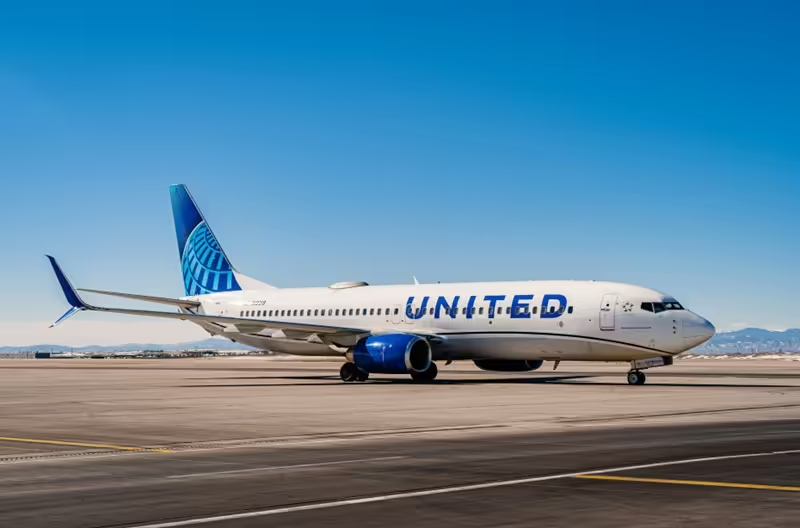
Statement from United Airlines CEO Scott Kirby
Over the last two weeks, there's been a lot of commentary about a potential merger between United Airlines and American Airlines. Merger Talks with American Airlines: Kirby confirmed he approached American Airlines about a potential merger, believing it could create a world-class airline focused on growth and customer experience. American Declined: American Airlines publicly rejected the idea, effectively ending discussions. Kirby emphasized that without a willing partner, such a large-scale merger cannot happen. Vision for Growth: Unlike past airline mergers that focused on cost-cutting, Kirby’s vision was about expansion—more routes, better service, and stronger global competitiveness. Customer Benefits: He highlighted that a combined airline could: - Offer more destinations and expanded loyalty rewards. - Provide affordable fares while enhancing value with modern aircraft, free Wi-Fi, and improved onboard technology. - Strengthen U.S. aviation against foreign carriers dominating long-haul routes. Economic Impact: Kirby argued the merger could create tens of thousands of unionized jobs, boost U.S. aircraft manufacturing, and generate billions in economic activity. Regulatory Outlook: He acknowledged skepticism but believed regulators might have approved a growth-focused merger rather than one centered on cuts. Future of United: Despite the end of talks, Kirby reaffirmed United’s independent strategy—innovation, customer investment, and a strong workforce of 115,000 employees. Tone of the Statement Kirby positioned the idea as bold and customer-centric, contrasting it with past mergers. While disappointed by American’s refusal, he used the moment to reinforce United’s confidence in its current trajectory.
Follow us on Insta