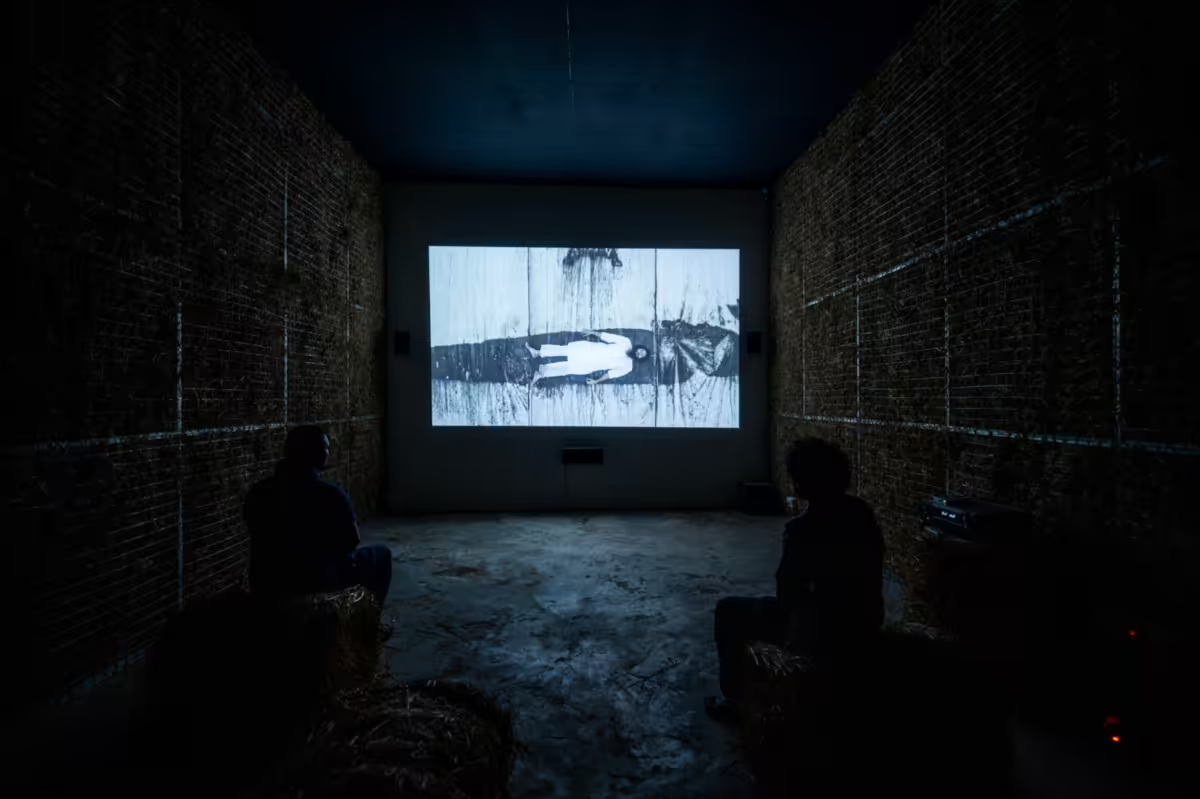
KMB artist Kulpreet Singh’s work a narrative of ground realities of agrarian, ecological and social fractures
Kulpreet Singh’s Indelible Black Marks (2022–ongoing) is a powerful, immersive work that situates farming practices—particularly stubble burning—within the broader histories of the Green Revolution and its ecological and social consequences. Core Narrative - The installation at Anand Warehouse, Mattancherry envelops viewers in a sooty, smoky atmosphere, echoing the lived reality of farmers. - Singh and fellow farmers run with long canvases trailing behind, evoking protest marches and cycles of violence against land, air, water, and people. - The film juxtaposes fire and water, sirens and chants, life and mortality—creating a visceral dialogue on ecological imbalance and social fractures. Philosophical & Spiritual Dimensions - Singh invokes the Gurbani line: “Pavan Guru, Pani Pita, Mata Dharat Mahat”—air as teacher, water as father, earth as mother—underscoring farming as a spiritual act, not merely resource extraction. - Ash becomes a metaphor: both mortality and renewal, a reminder of what fills our “inner pockets” and how clarity and compassion must replace neglect. Artistic Practice - His soot-ridden paintings, burnt stalks, and film are inseparable from his farming roots. - Singh sees farming and art as acts of seva (service)—cultivation for collective well-being, whether through food or cultural dialogue. - The practice of langar (community kitchen) is referenced as a living example of equality and care, contrasted with the ecological disruption of monocropping and chemical-intensive agriculture. Broader Significance - The work critiques the Green Revolution’s legacy—soil depletion, groundwater exhaustion, and precarious farmer livelihoods. - It situates Punjab’s farming struggles within global contexts, noting that stubble burning persists even in developed countries due to limited alternatives. - Ultimately, Singh calls for a “humane revolution”—slowing down, reimagining society with justice, gentleness, and ecological balance.
Follow us on Insta