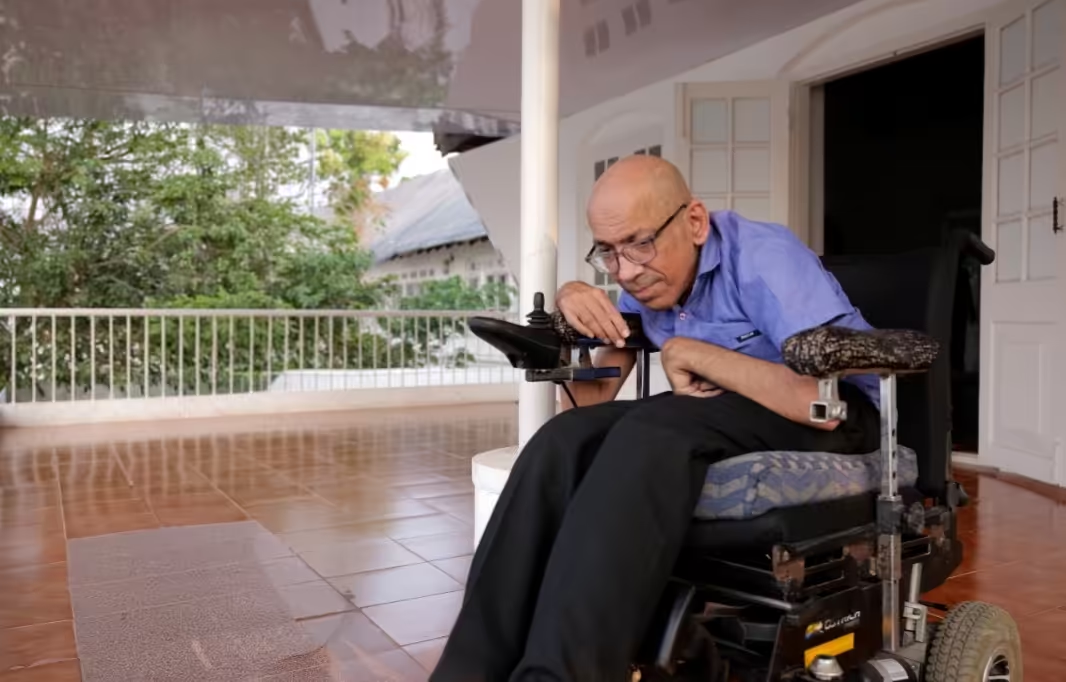
Kochi Biennale Foundation makes major accessibility push across key venues
The Kochi Biennale Foundation (KBF) has significantly expanded accessibility measures this year, reaffirming its commitment to making India’s largest contemporary art exhibition inclusive and barrier-free. In a landmark step, six key venues have been made accessible to differently abled visitors, embedding inclusivity into the very fabric of the biennale experience. Major Accessibility Push – Kochi Biennale Foundation (KBF) - Scope: Accessibility upgrades across key venues of the Kochi-Muziris Biennale. - Objective: Ensure inclusivity for differently-abled visitors, senior citizens, and those with mobility challenges. Venue Enhancements - Installation of ramps, elevators, and accessible pathways at heritage and contemporary art spaces. - Improved signage and wayfinding systems with clear visual cues. - Dedicated accessible restrooms and seating areas. - Enhanced lighting and tactile flooring for visually impaired visitors. Visitor Experience - Introduction of audio guides and descriptive tours for visually impaired audiences. - Sign language interpretation at select events. - Training programs for volunteers and staff to assist visitors with diverse needs. Strategic Context - KBF’s initiative aligns with global best practices in cultural accessibility. - Reinforces the Biennale’s role as a people’s festival, welcoming audiences from all backgrounds. - Strengthens Kerala’s positioning as an inclusive cultural tourism destination. This accessibility push is significant because art festivals often struggle with heritage venues that weren’t originally designed for inclusivity. KBF’s effort sets a benchmark for Indian cultural institutions.
Follow us on Insta