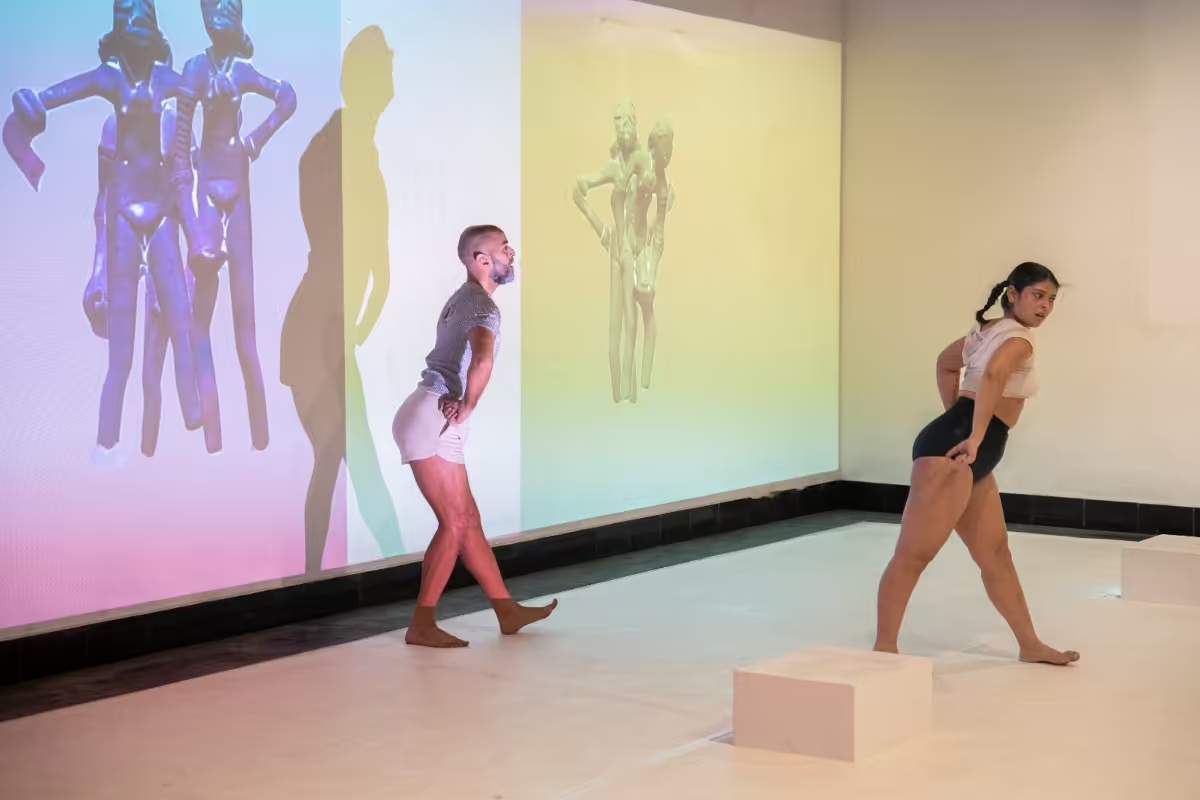
Mandeep Raikhy’s installation questions colonial interpretation of Mohenjo-daro’s Dancing Girl figurine
Mandeep Raikhy’s installation “Hallucinations of an Artefact” at the sixth Kochi-Muziris Biennale (2025–26) is a powerful artistic inquiry into how colonial narratives shaped the interpretation of the famous Mohenjo-daro Dancing Girl figurine. The Dancing Girl Figurine - Discovered in 1926 during excavations of the Indus Valley Civilization. - A small bronze statue (11 inches tall), often described through the lens of classical Indian dance traditions. - Colonial scholars framed her stance (the tribhanga pose) as evidence of early Indian dance, fixing her identity within rigid categories of art, nudity, and sexuality. Raikhy’s Artistic Response - Deconstruction of Colonial Gaze: Raikhy challenges the imposed interpretations, asking whether the figurine’s identity was frozen by colonial biases. - AI Projection & Performance: - The figurine is “awakened” through AI-generated visuals projected across three walls. - Raikhy dances alongside collaborators Akanksha Kumari and Manju Sharma, responding to the artefact’s movements. - Fluid Identities: The Dancing Girl transforms—museum piece, warrior, child, friend, nightclub dancer—breaking fixed notions of history and gender. - Themes Explored: Nationality, nudity, sexuality, and the body as a site of cultural negotiation. - Audience Interaction: Viewers were invited to join the dance, embodying the figurine themselves during rehearsals. Significance - Art as Resistance: By questioning colonial framing, Raikhy reclaims the figurine’s narrative for contemporary India. - Living Artefact: The installation suggests that culture is not static but evolving, with artefacts capable of new meanings in modern contexts. - Critical Reflection: It highlights how history is often written to serve power structures, and how art can disrupt those narratives. This work resonates deeply with the Biennale’s ethos: art as a dialogue between past and present, tradition and innovation.
Follow us on Insta