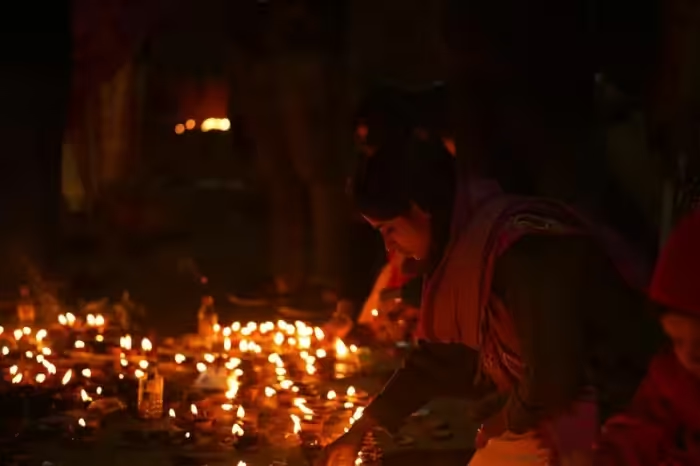
UNESCO Intangible Cultural Heritage: 67 cultural practices inscribed
At its 20th session in New Delhi (India), the UNESCO Intergovernmental Committee for the Safeguarding of Intangible Cultural Heritage examined and inscribed 67 cultural practices onto its official lists. Total examined: 67 elements from 77 countries. Breakdown of inscriptions: - 11 elements → added to the List of Intangible Cultural Heritage in Need of Urgent Safeguarding. - 53 elements → inscribed on the Representative List of the Intangible Cultural Heritage of Humanity. - 1 programme → selected for the Register of Good Safeguarding Practices. Transfers: 2 elements moved from the Urgent Safeguarding List to the Representative List due to successful preservation efforts. Global reach: With these additions, 849 cultural practices across 157 countries are now recognized as part of UNESCO’s living heritage. New countries represented: Barbados, Chad, Comoros, El Salvador, Gabon, Libya, and São Tomé & Príncipe had their first-ever inscriptions. Multinational nominations: 9 inscriptions were submitted jointly by 28 countries, highlighting cross-border cultural cooperation. Themes: Many practices emphasized traditional craftsmanship, foodways, music, and performing arts, often linked to sustainable livelihoods and community identity. Participation: Over 1,400 delegates attended, making this the largest session to date. Why It Matters These inscriptions reinforce the importance of living heritage as a pillar of cultural diversity, community resilience, and sustainable development. They also highlight how traditional practices—whether artisanal crafts, rituals, or performing arts—remain deeply relevant in today’s fragmented world.
Follow us on Insta