IGNCA Highlights Natyashastra’s Contemporary Relevance at the Sidelines of UNESCO ICH Meeting
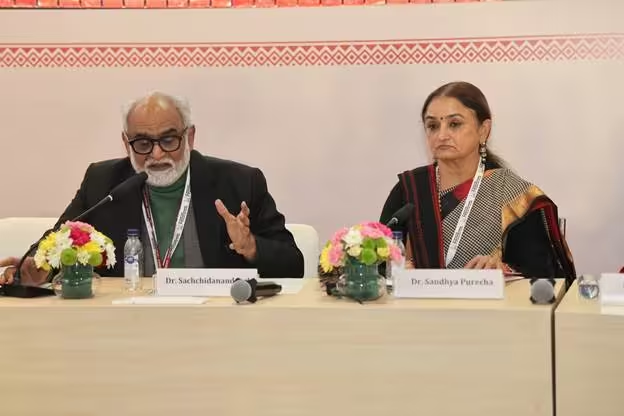
The Indira Gandhi National Centre for the Arts (IGNCA) recently organized an academic programme titled “Natyashastra – Synthesis of Theory and Praxis” during the 20th Session of UNESCO’s Intergovernmental Committee for the Safeguarding of Intangible Cultural Heritage at the Red Fort, Delhi. Chairperson: Padma Vibhushan awardee and scholar Dr. Sonal Mansingh led the session, emphasizing the enduring universality of the Natyashastra and its relevance across cultures and time. Scholarly Contributions: - Dr. Sachchidanand Joshi (IGNCA) described the text as a living knowledge system that integrates theory and practice, inviting continual reinterpretation. - Dr. Sandhya Purecha (Sangeet Natak Akademi) highlighted its systematic structure, philosophical depth, and pan-Indian influence. - Shri Chittaranjan Tripathy (National School of Drama) explained how classical dramaturgical principles continue to shape modern theatre. - Prof. Sudhir Kumar Lall (IGNCA) noted its metaphysical framework that unites drama, dance, and music. - Dr. Yogesh Sharma (IGNCA) elaborated on Natyangas, the conceptual framework guiding performance aesthetics. A short film on the inscription of the Natyashastra in UNESCO’s Memory of the World Register was screened. Contemporary Relevance:The discussions reaffirmed the Natyashastra as a seminal intellectual and artistic resource, bridging tradition and modernity, and offering a dynamic framework for artistic creation and pedagogy. Audience: The event drew cultural enthusiasts, scholars, and practitioners, underscoring IGNCA’s commitment to fostering informed discourse on India’s classical performing arts. This session positioned the Natyashastra not just as a historical text but as a living continuum, deeply relevant to contemporary artistic practice and cultural dialogue.
Follow us on Insta