India Advances Green Hydrogen Mobility with NISE-Toyota Fuel Cell Vehicle Pilot
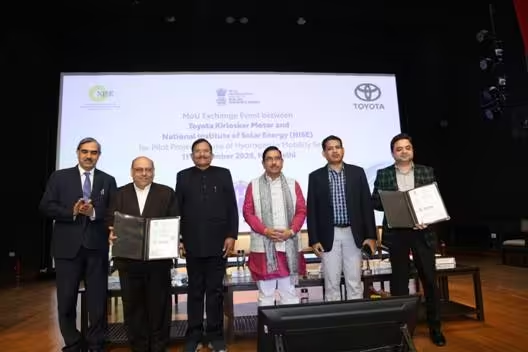
India has taken a major step toward clean transport with the launch of a pilot project on hydrogen mobility, in collaboration between the National Institute of Solar Energy (NISE) and Toyota Kirloskar Motor (TKM). Launch Event: - Union Minister for New & Renewable Energy, Shri Pralhad Joshi, unveiled the pilot project in December 2025. - Toyota’s Mirai hydrogen fuel cell electric vehicle (FCEV) was handed over to NISE for real-world testing. Technology & Innovation: - The Mirai produces electricity by combining hydrogen and oxygen, emitting only water vapor. - Driving range: ~650 km per refueling. - Refueling time: under 5 minutes. - Silent, zero-emission, and efficient — ideal for India’s diverse road conditions. Testing & Evaluation: - NISE will conduct a two-year assessment across varied Indian terrains — heat, dust, traffic congestion, and rural roads. - Insights will help scale hydrogen mobility nationwide and build confidence among industry, academia, and policymakers. Strategic Importance: - Supports India’s National Green Hydrogen Mission (2023). - Strengthens Energy Aatma Nirbharta (self-reliance in energy). - Aligns with India’s Panchamrit climate commitments and net-zero goals. Global Context: - Hydrogen fuel cell technologies are increasingly powering cars, buses, trucks, trains, ships, and stationary power systems worldwide. - India’s pilot positions it as a leader in hydrogen adoption in Asia. Leadership Voices - Shri Pralhad Joshi: “With this vehicle, we are launching not just an MoU but confidence, cooperation and commitment to a clean and sustainable future.” - Shri Shripad Yesso Naik (MoS, MNRE): “This initiative marks a significant step towards India’s clean, green, and self-reliant energy future.” This pilot is a symbolic and practical leap toward India’s hydrogen-powered mobility ecosystem, showcasing how partnerships between government, industry, and research institutions can accelerate the clean energy transition.
Follow us on Insta