India’s First Indigenous Hydrogen Fuel Cell Passenger Vessel Begins Commercial Service in Varanasi
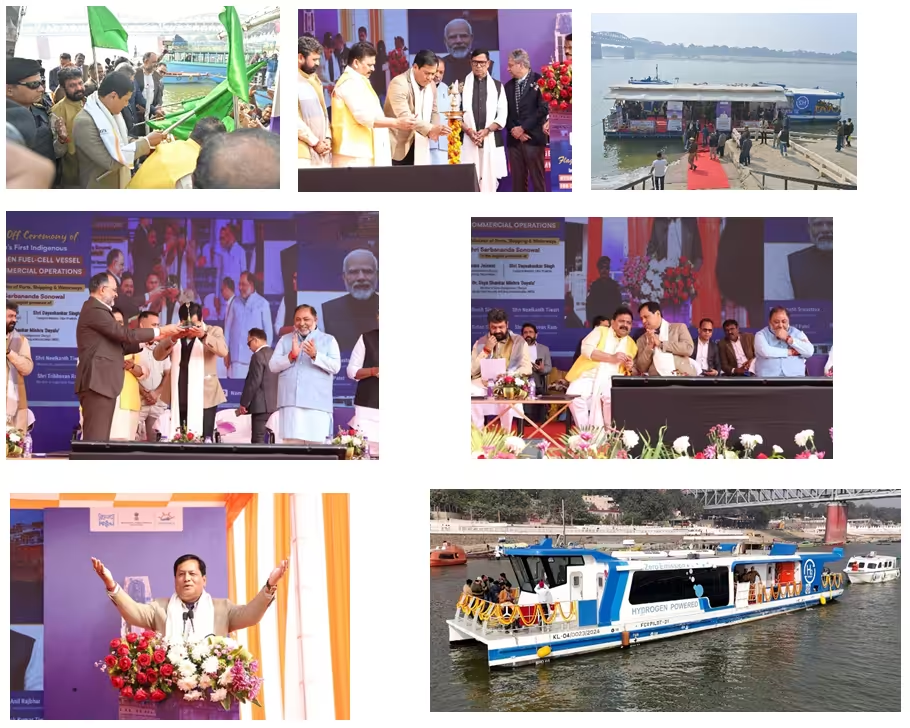
India has officially launched its first indigenous hydrogen fuel cell passenger vessel, marking a major milestone in the country’s green maritime journey. Here are the key details: About the Vessel - Location: Namo Ghat, Varanasi (on the Ganga, National Waterway‑1). - Design: A 24‑meter catamaran built by Cochin Shipyard Ltd. (CSL). - Capacity: 50 passengers in a fully air‑conditioned cabin. Technology: - Powered by a Low Temperature Proton Exchange Membrane (PEM) fuel cell system. - Hybrid energy mix: hydrogen fuel cells + batteries + solar power. - Zero emissions — only water as a byproduct. Performance: - Service speed: 6.5–9 knots. - Up to 8 hours of operation on a single hydrogen fill. - Certified by the Indian Register of Shipping. Significance - Net‑Zero Push: Supports India’s commitment to achieve net‑zero emissions by 2070. - Innovation: First demonstration of hydrogen fuel cell propulsion in India’s maritime sector. Benefits: - Noise‑free, smoke‑free, and pollution‑free travel. - Reduced road congestion by shifting mobility to waterways. - Boosts local tourism and job opportunities. - Positions Varanasi among the world’s first cities to adopt hydrogen‑powered passenger transport. Leadership & Vision - Flagged off by Sarbananda Sonowal, Union Minister for Ports, Shipping and Waterways. - Aligned with Maritime India Vision 2030 and Maritime Amrit Kaal Vision 2047. - Seen as a showcase of “Make in India” innovation and ecological responsibility under Prime Minister Narendra Modi’s leadership. Partnerships - Owned by Inland Waterways Authority of India (IWAI). - Operated under a tripartite agreement between IWAI, CSL, and Inland & Coastal Shipping Ltd. - Agreement covers technical support, safety procedures, monitoring, and periodic inspections. This maiden voyage — a 5 km trip from Namo Ghat to Lalita Ghat — signals the start of commercial operations for hydrogen‑powered passenger transport in India.
Follow us on Insta