New Research Reveals Travelers Are Two Years Ahead of the Travel Industry on AI
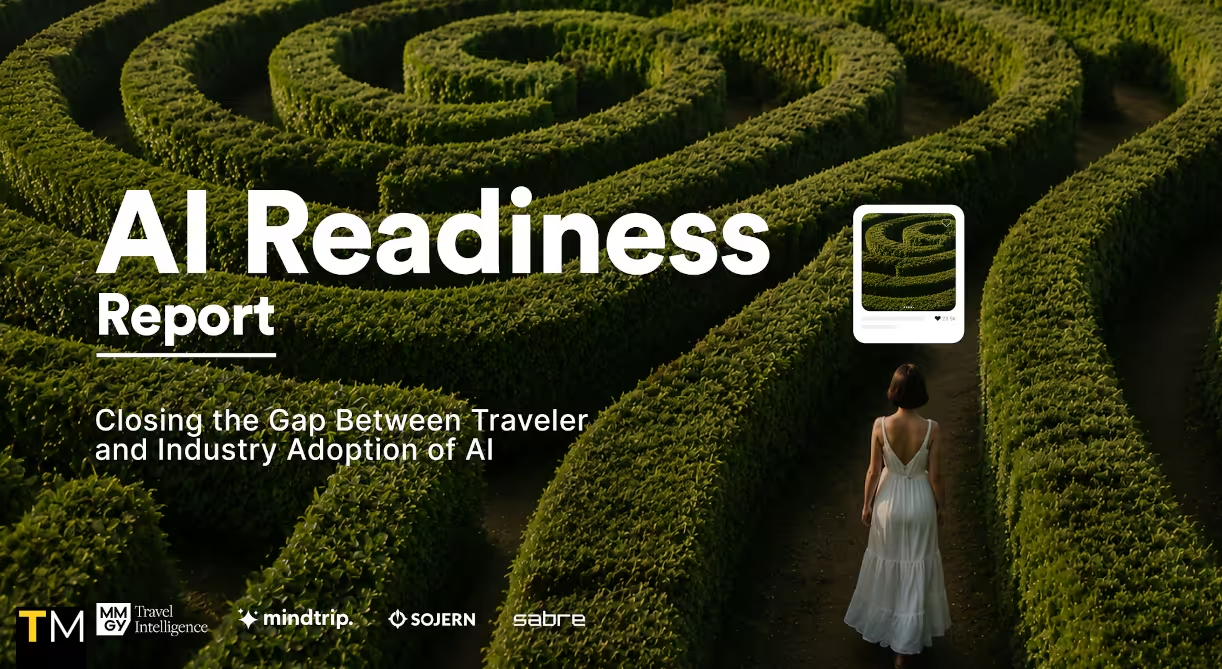
The new Mindtrip study (with Sabre, Sojern, and MMGY Travel Intelligence) highlights a striking gap: travelers are already embracing AI for trip planning, while much of the travel industry lags behind.
Key Findings
- Travelers are 2 years ahead of the industry in AI adoption.
- 54% have already used AI to plan trips; 75% intend to use it for future travel.
- Millennials (69%) and Gen Z (63%) use AI assistants as often as social media for planning.
- 40% discovered a destination through AI; 29% changed plans based on AI recommendations.
Travelers use AI for:
- Researching itineraries (42%)
- Comparing flights, hotels, tours (32%)
- Finding destination ideas (32%)
- Researching attractions/restaurants/transport (60%)
- Comparing prices (56%)
- Building itineraries (43%)
Industry Readiness Gap
- Only 22% of DMOs offer AI trip-planning features on their sites.
- Just 26% have a documented AI strategy.
- 72% of DMO leaders warn that failing to adopt AI within 2 years risks irrelevance.
- Many DMOs still focus on “inspiration,” while travelers want utility (itinerary building, booking support).
Expert Voices
- Michelle Denogean (Mindtrip CMO): “Travelers aren’t waiting for the industry to catch up.”
- Sylvia Weiler (Sojern): “We’re witnessing the biggest shift in travel planning since online booking.”
- Brad Johnson (Sabre): AI creates opportunities for DMOs to connect inspiration, planning, and booking seamlessly.
Implications
- AI is becoming the primary interface for travel discovery and planning.
- DMOs that invest in authoritative content, seamless AI experiences, and booking integration will be best positioned to capture the next generation of travelers.
This research suggests we’re at an inflection point: AI is no longer just a tool for inspiration — it’s becoming the engine of decision-making and booking.