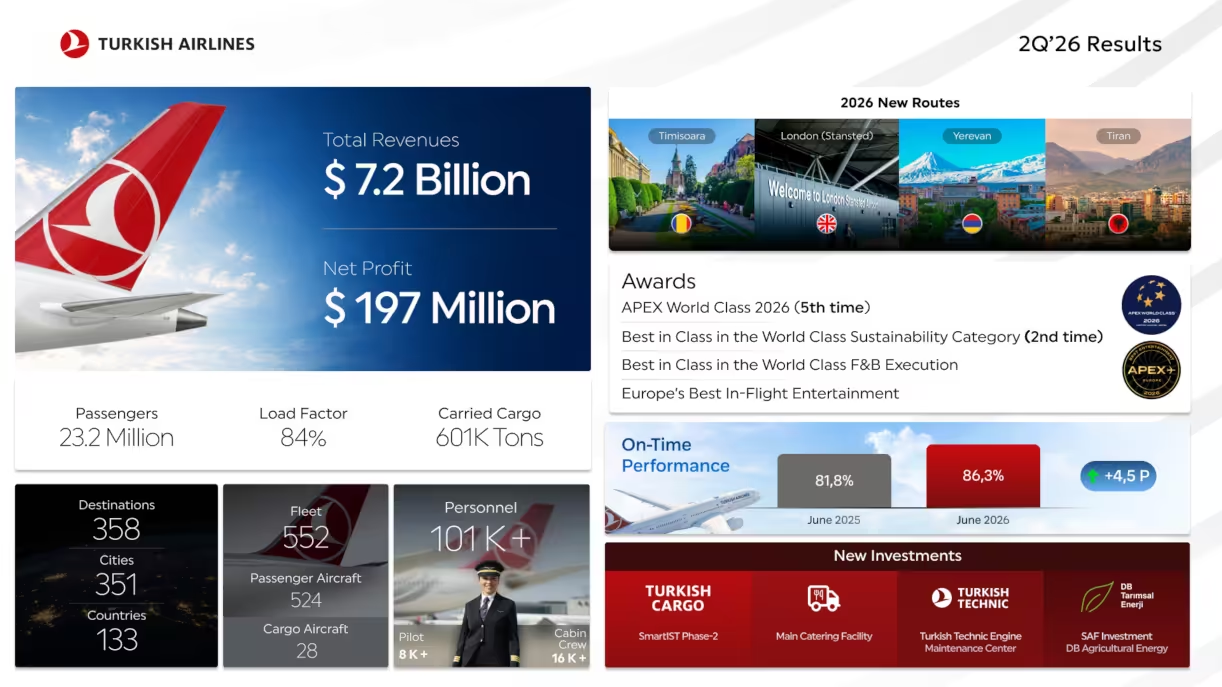
Turkish Airlines Recorded a Net Profit of USD 197 Million in the Second Quarter of 2026
Turkish Airlines Balanced the Adverse Effects of the War in the Middle East Through Dynamic Capacity Management and Recorded a Net Profit of USD 197 Million in the Second Quarter of 2026.
Financial Highlights
- Total Revenues: USD 7.2B (+20.5% YoY)
- Cargo Revenues: USD 1.3B (+58% YoY), volume up 11.3%
- EBITDAR Margin: 12.6% (above guidance of 8%)
- Net Profit: USD 197M
- Investments: USD 3.1B in H1 2026
- Total Assets: USD 51B
- Employment: 101,000+ across subsidiaries
Operational Performance
- Passenger Load Factor: 84.0% (+1.8pp), highest Q2 in company history.
- Fleet Expansion: +14% YoY → 552 aircraft by June 2026.
- Cargo Strength: Leveraged strategic geography to offset global air cargo pressures.
Outlook
- Q3 EBITDAR Margin Guidance: 20–25%, supported by strong demand despite higher jet fuel prices.
- Strategy: Dynamic capacity management, selective investments, disciplined cost control.
- Centennial Targets: Continue sustainable growth, expand global network, maintain customer satisfaction focus.
Leadership Commentary
- Prof. Murat Şeker (Chairman): Highlighted resilience amid geopolitical tensions and fuel price spikes, crediting diversified business model and agile operations.
- Emphasis on efficiency initiatives, flight safety, and customer satisfaction as core priorities.
This quarter shows how Turkish Airlines balanced Middle East war impacts and fuel cost pressures with agile capacity management and strong cargo demand. It’s a textbook case of resilience in aviation strategy.
Follow us on Insta