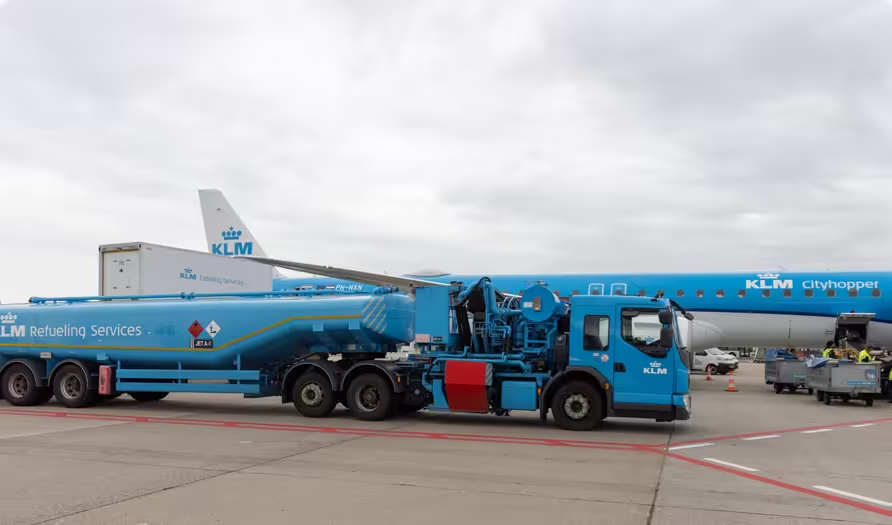
KLM operates passenger flight to Germany with a blend of synthetic kerosene
In collaboration with INERATEC, MB Energy, and Hamburg Airport, KLM Cityhopper operated a passenger flight between Amsterdam and Hamburg using a 5% blend of synthetic kerosene (e-SAF). This is the first passenger flight to Germany using this fuel. With this, KLM once again demonstrates that flying on e-SAF is technically possible, despite the current challenges surrounding scalability and availability. Milestone flight: On June 9, 2026, KLM Cityhopper flew from Amsterdam to Hamburg using a 5% blend of synthetic kerosene (e‑SAF). It’s the first passenger flight to Germany powered by this fuel. Fuel production: The synthetic kerosene was produced by INERATEC, blended with fossil kerosene by MB Energy, and refueled at Schiphol Airport. Environmental impact: e‑SAF is made from renewable electricity, CO₂, and water. It can cut lifecycle emissions by over 90% compared to fossil kerosene. Challenges: Availability is still very limited — only 200 liters were used this time, compared to 500 liters in KLM’s 2021 Madrid flight. Costs are high too: e‑SAF is about 4× more expensive than SAF and 8× more than conventional kerosene. Policy context: Europe has set a mandate for alternative fuels, aiming for a 1.2% e‑SAF blend by 2030, but current production is far behind. Permitting and legislation uncertainties add to the difficulty. Industry voices: - KLM CEO Marjan Rintel stressed the need for scaling up and affordability. - Hamburg Airport’s chairman highlighted readiness of infrastructure and incentives. - INERATEC and MB Energy emphasized operational viability and preparing supply chains. This flight is more symbolic than practical right now, but it’s a clear signal of where aviation wants to head.
Follow us on Insta