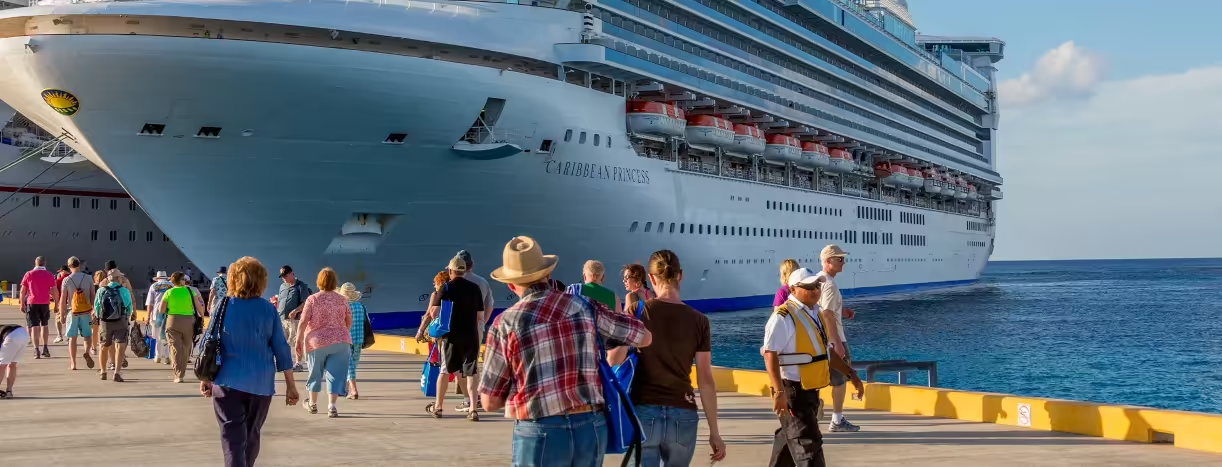
International tourism up 2% in Q1 2026 amid growing uncertainty
According to the latest data from UN Tourism, some 307 million tourists traveled internationally in the first quarter of 2026, about 6 million more than the same period of 2025. While the start of the year saw sustained travel demand overall (+2.5% cumulative growth in January and February), the Middle East conflict impacted performance in March (+0.4%). Global Overview - 307 million international tourists traveled in Q1 2026 (+2% YoY, +6 million vs. 2025). - Growth slowed in March (+0.4%) due to the Middle East conflict. - Forecast for 2026 revised down: 1–2 percentage points lower than the initial 3–4% projection. - Rising oil prices and jet fuel shortages are increasing airfares and reducing flight capacity globally. Regional Performance - Europe: 130M arrivals (+4%). Strong in Southern Mediterranean, Northern Europe (+4%), and Central Eastern Europe (+6%). - Africa: +4% overall. North Africa surged (+18% in March). Sub-Saharan Africa steady (+4%). - Asia-Pacific: +3%. Strong in Oceania (+9%) and North-East Asia (+5%). South Asia declined (-27%). Still 11% below pre-pandemic levels. - Americas: +2%. Central America (+18%), South America (-1%). - Middle East: -14%. Gulf destinations declined sharply; Egypt bucked trend (+16%). Standout Destinations - Arrivals growth: Paraguay (+46%), New Caledonia (+45%), El Salvador (+43%), Mongolia (+39%), Palau (+37%), Uzbekistan (+37%). - Receipts growth: Pakistan (+60%), Korea (+38%), Morocco (+24%), Brunei (+22%), Brazil (+12%). Industry Indicators - Air traffic (IATA): +4% RPKs in Q1, but Middle East carriers -61% in March. - Air capacity: +2% ASKs overall; -57% in Middle East (March). - Accommodation occupancy: Global 64% in March. Europe, Americas, Asia-Pacific at 65%; Africa 56%; Middle East dropped to 48% (from 75% in January). Expert Sentiment - Main concerns: Middle East conflict, high transport/accommodation costs, inflation. - Impact perception: 64% of experts see negative demand effects (43% moderate, 21% high). - Confidence Index (May–Aug 2026): 105 (cautious optimism, down from 117 in Jan–Apr). - Opportunities: Closer destinations may benefit; North America expected to gain from FIFA World Cup 2026. Key Takeaway Despite geopolitical and economic pressures, tourism remains resilient, with Europe and Africa leading growth. The Middle East conflict is reshaping travel flows, raising costs, and shifting demand toward nearer destinations, but global tourism continues to support economies and communities worldwide.
Follow us on Insta