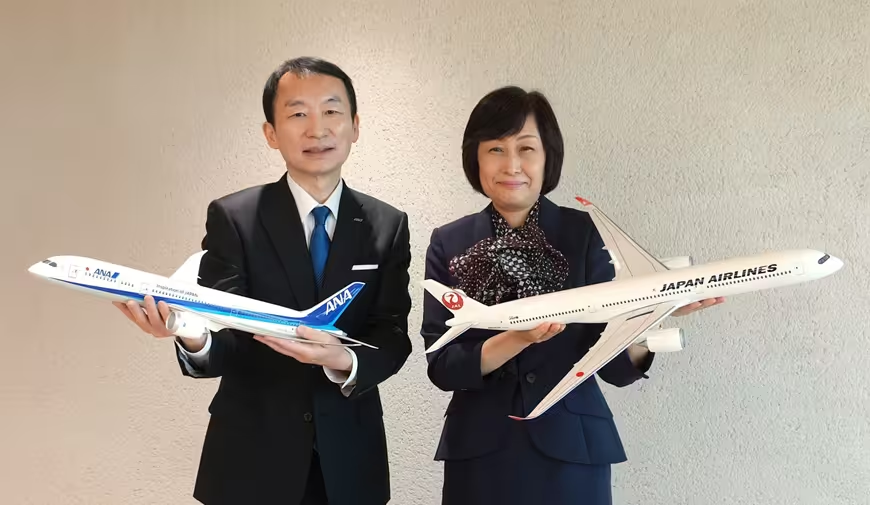
ANA and JAL Release Second Joint Report on Sustainable Aviation Fuel
All Nippon Airways (ANA) and Japan Airlines (JAL) released the second edition of their joint report, "Toward Net Zero CO2 Emissions from Air Transport in 2050," outlining the current state of sustainable aviation fuel (SAF) in Japan and the actions needed to support aviation decarbonization. The report calls for a society-wide effort to achieve net-zero carbon dioxide emissions in air transportation by 2050. Purpose of the Report - ANA and JAL jointly released the second edition of “Toward Net Zero CO2 Emissions from Air Transport in 2050” (May 27, 2026). - It emphasizes the critical role of SAF in achieving aviation decarbonization and calls for a society-wide framework to support sustainable air transport in Japan. Key Findings - Global SAF Gap: SAF accounted for only 0.6% of global aviation fuel use in 2025. Without rapid scaling and cost reduction in the next five years, aviation cannot meet net-zero goals. - Economic Importance: Japan’s aviation sector generates 17 trillion JPY annually. Stable fuel supplies are vital for tourism (target: 60 million inbound visitors) and connectivity to regional/remote communities. - Japanese Model: Advocates a tailored regulatory approach aligned with domestic SAF production capacity to avoid supply-demand imbalances. - Scope 3 Co-Creation: ANA and JAL propose sharing SAF costs across society, helping companies reduce indirect (Scope 3) emissions. - Unified Industry Approach: ANA and JAL act as the “two wings” of Japan’s aviation sector, collaborating across competitive boundaries for sustainability. Leadership Statements - Juichi Hirasawa (ANA CEO): Warned that delays in securing SAF pose a direct risk to Japan’s economic security. - Mitsuko Tottori (JAL CEO): Stressed aviation’s mission to sustain human connections and pledged unwavering commitment to scaling SAF despite challenges. This joint report builds on their first SAF collaboration from 2021 and strengthens Japan’s aviation decarbonization roadmap.
Follow us on Insta