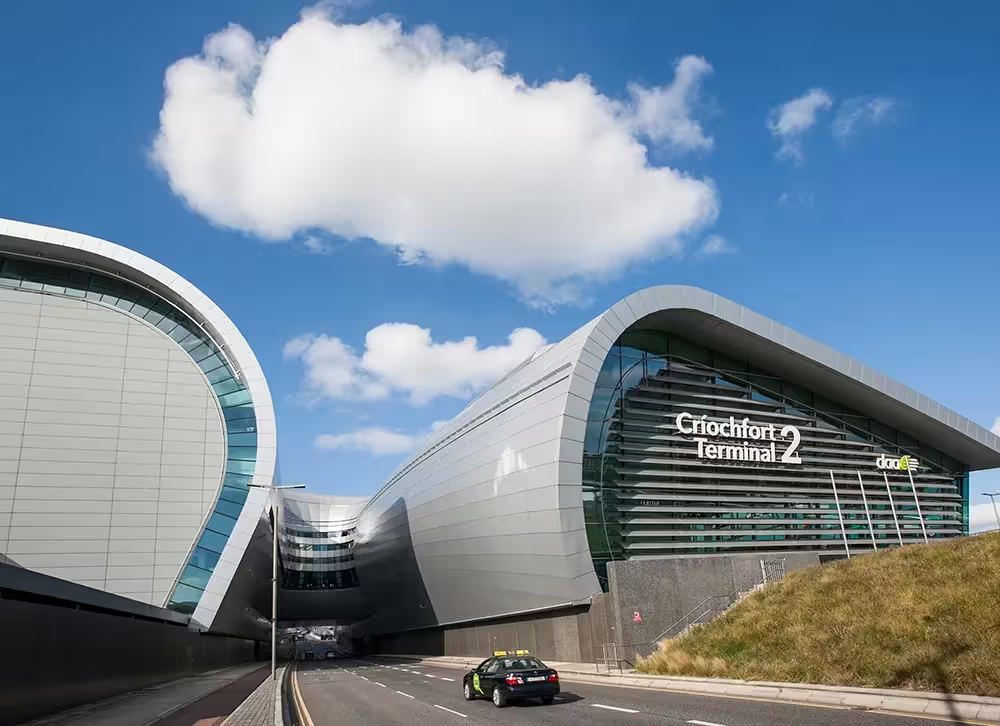
IATA Statement on the General Scheme of the Dublin Airport (Passenger Capacity) Bill 2026
Ireland’s aviation sector is not simply an important industry—it is a strategic national asset. Air connectivity underpins Ireland’s role as a global, outward‑looking economy. Context - Dublin Airport is Ireland’s main international gateway. - A long-standing passenger cap has been restricting growth, limiting consumer choice, and threatening Ireland’s competitiveness. IATA’s Position - Aviation contributes over USD 20 billion to Ireland’s GDP and supports 128,000 jobs, with air-enabled tourism adding another USD 22 billion. - The passenger cap is seen as a real and immediate risk, pushing airlines to consider alternative airports for future growth. - The proposed Bill introduces a modern, transparent mechanism allowing the Minister to act when the cap harms connectivity or the economy. Urgency - Airlines begin planning for Summer 2027 schedules in September 2026. - If certainty isn’t restored before October, airlines will assume the cap remains, and once aircraft and crews are allocated elsewhere, those decisions are unlikely to be reversed. - Ireland risks losing connectivity that may not return. Environmental Compliance - IATA acknowledges environmental requirements but warns that prolonged consultations and sequencing could delay decisions beyond what the global scheduling system can accommodate. Conclusion - IATA strongly supports swift enactment and commencement of the Bill to protect Ireland’s connectivity and economic resilience. This statement underscores the tension between capacity growth and regulatory processes—with IATA pressing for speed to avoid long-term damage to Ireland’s aviation sector.
Follow us on Insta