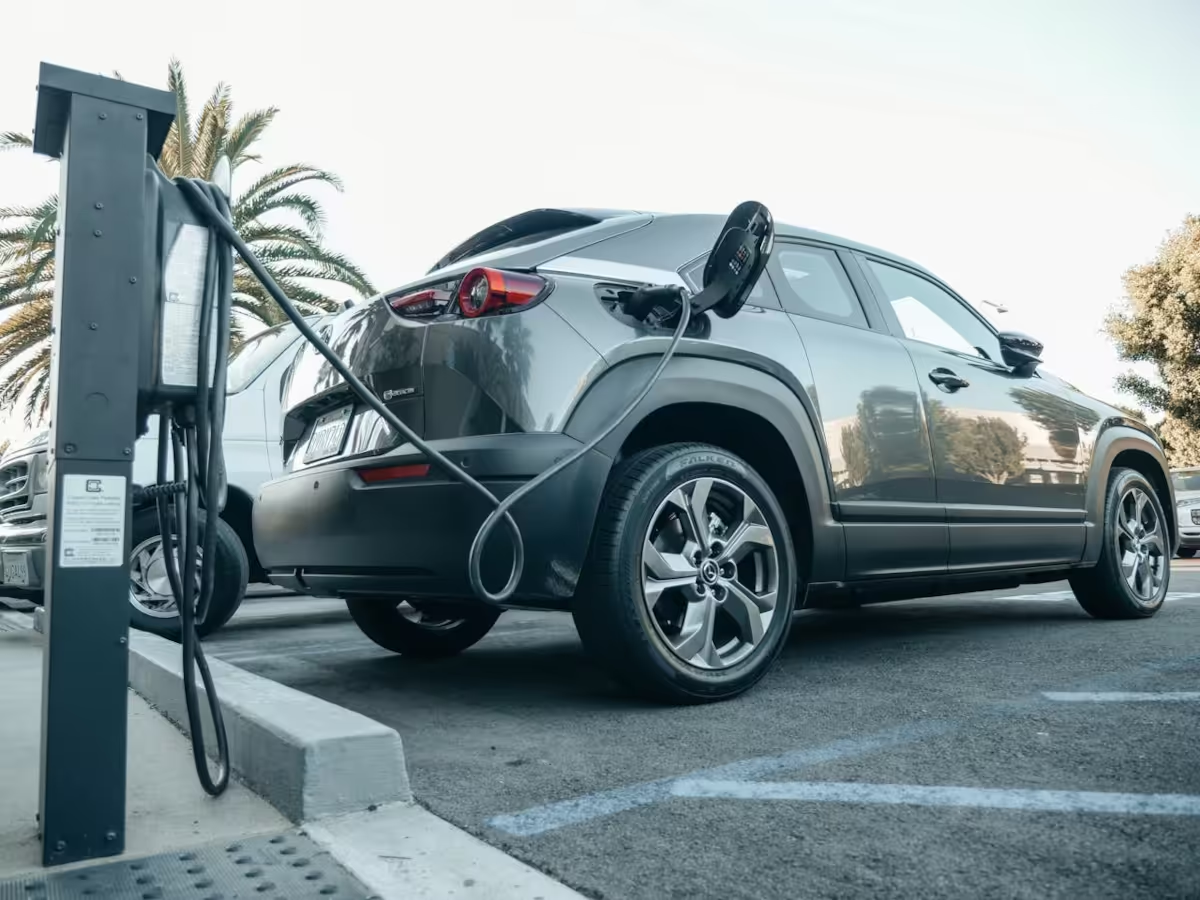
Readiness of highways and expressways in India to support electric vehicles (EVs)
Corridor-wise data is not available on centralized basis. However, as per information received from MoPNG, the three Oil Marketing Companies (OMCs) namely IOCL, BPCL, and HPCL have installed 236 EV charging stations on these specific corridors. Current EV Charging Infrastructure - Installed by Oil Marketing Companies (OMCs): - Bengaluru–Chennai Expressway: 30 stations (26 installed, 4 commissioned) - Bengaluru–Hyderabad Highway (NH-44): 64 stations (41 installed, 23 commissioned) - Bengaluru–Mysuru Expressway (NH-275): 33 stations (22 installed, 11 commissioned) - Bengaluru–Pune Highway (NH-48): 109 stations (60 installed, 49 commissioned) - Total across these corridors: 236 EV charging stations (149 installed, 87 commissioned) Policy & Private Sector Role - Unlicensed Activity: Setting up EV charging stations is an unlicensed activity under Ministry of Power guidelines (Sept 17, 2024). - Private Participation: Private players are free to install EVCS based on demand forecasts, complementing public sector efforts. Zero-Emission Trucking Corridors - Study by Principal Scientific Advisor (PSA): - Released May 9, 2025: “India’s Priority Corridors for Zero-Emission Trucking”. - Identified 10 priority corridors for early deployment of electric trucks. - Bengaluru–Chennai corridor is among these priority routes. Power Grid Readiness - National Transmission System: - Adequately developed to ensure reliable power flow across regions. - Robust national grid enables transfer of electricity from surplus to deficit regions. - Capacity is continuously augmented to meet growing demand, including EV charging loads. Key Takeaways - India’s highways are progressively being equipped with EV charging stations, especially on high-traffic corridors. - Public + private collaboration is central to scaling infrastructure. - National grid strength ensures long-term sustainability of EV adoption. - Strategic studies are guiding electric truck deployment on priority corridors.
Follow us on Insta