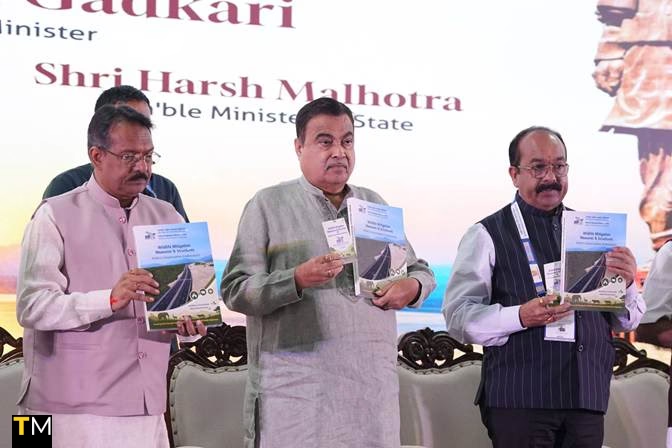
NHAI Releases Document on ‘Wildlife Mitigation Measures and Structures’
To mark National Wildlife Week (October 2-8, 2026), the National Highways Authority of India (NHAI) has released a comprehensive document titled Wildlife Mitigation Measures & Structures, highlighting how highway development is being integrated with wildlife conservation.
The document reflects NHAI's strategy of balancing infrastructure expansion, road connectivity, and ecological sustainability through dedicated wildlife-friendly engineering solutions.
₹19,700 Crore Invested in Wildlife Mitigation
Over the last five years, NHAI has invested approximately ₹19,700 crore in wildlife mitigation infrastructure and environmental protection measures across National Highway projects.
These investments are aimed at addressing:
- Habitat fragmentation
- Wildlife-vehicle collisions
- Barrier effects caused by highways
- Maintenance of ecological connectivity
More Than 2,150 Wildlife Mitigation Structures
NHAI has constructed or proposed over 2,150 wildlife mitigation structures nationwide, including:
- Animal Underpasses (AUPs)
- Animal Overpasses
- Bridge-cum-animal crossings
- Wildlife-friendly culverts
- Canopy crossings for arboreal species
- Specialized fauna movement structures
Breakdown of Investments
- Mitigation Structure InvestmentAnimal Underpasses ₹4,600 crore
- Animal Overpasses ₹650 crore
- Viaducts ₹8,300 crore
- Tunnels ₹2,800 crore
- Major Bridges ₹2,500 crore
- Minor Bridges ₹500 crore
These structures help wildlife safely cross transportation corridors while reducing risks to motorists.
Non-Structural Conservation Measures
Beyond physical structures, NHAI has implemented:
- Wildlife warning signage
- Speed regulation zones
- Guide fencing
- Noise barriers
- Reptile crossings
- Rainwater harvesting systems
- Habitat management interventions
300 km of Protected Highway Corridors
To guide animals toward designated crossings and minimize accidents, NHAI has installed:
- Guide fencing
- Noise barriers
along more than 300 kilometers of National Highway alignments.
Technology-Driven Monitoring
NHAI is also using:
- Camera traps
- Wildlife movement monitoring systems
- Collision hotspot assessments
These tools help evaluate the effectiveness of mitigation measures and identify areas requiring additional intervention.
Integrated Conservation Approach
The document emphasizes collaboration among:
- Highway planners
- Engineers
- Environmental experts
- Wildlife conservationists
The objective is to ensure biodiversity considerations are incorporated from the planning stage through project implementation, helping India expand its highway network while complying with environmental regulations and protecting wildlife habitats.
Why It Matters
India's expanding highway network often intersects with biodiversity-rich landscapes and wildlife corridors. NHAI's wildlife mitigation framework represents a shift toward eco-sensitive infrastructure development, where transportation projects are designed not only for mobility and economic growth but also for long-term conservation of wildlife and habitats.
With over 2,150 wildlife crossings and mitigation structures and nearly ₹19,700 crore invested, NHAI is positioning wildlife conservation as a core component of National Highway development, aiming to reduce animal-vehicle conflicts while preserving ecological connectivity across the country.