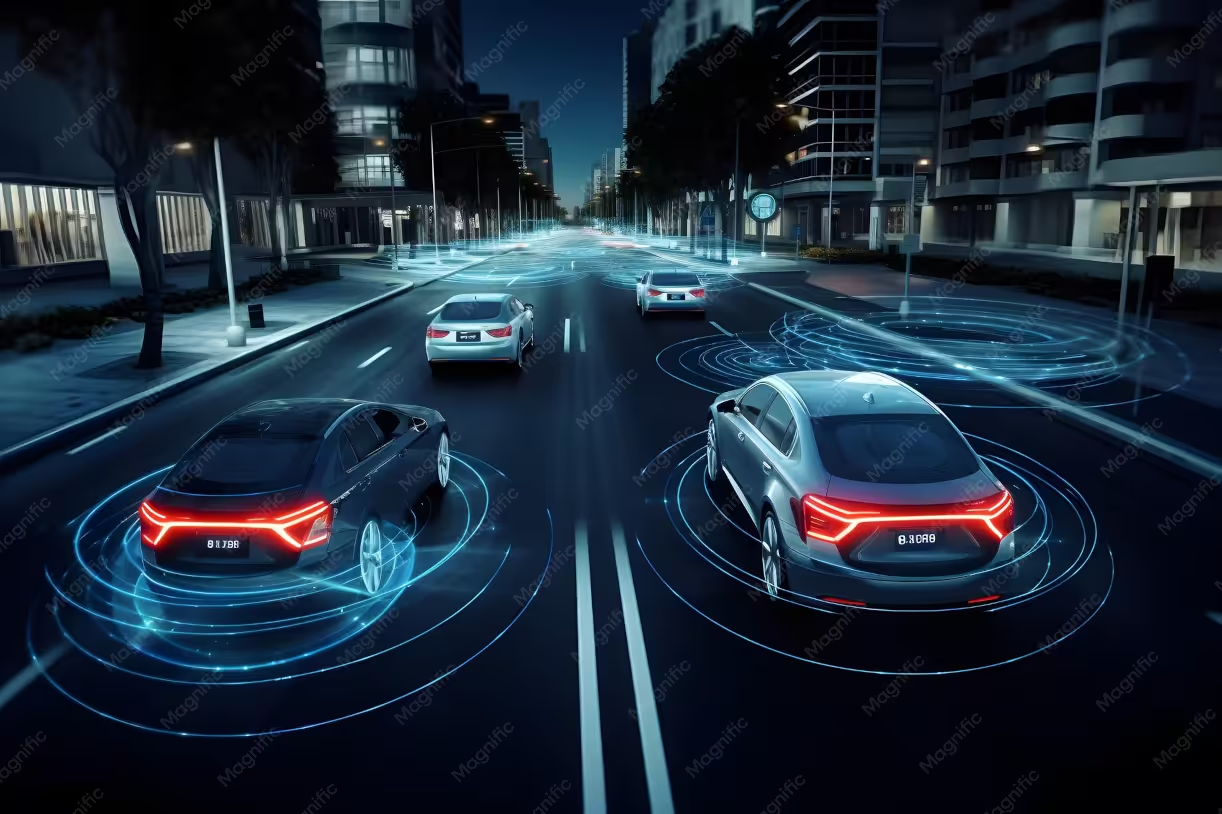
MoRTH to rollout Vehicle-to-Vehicle (V2V) communication systems in India starting 1 Oct 2027 for connected and safer mobility
The Ministry of Road Transport and Highways has proposed a phased rollout of Vehicle-to-Vehicle (V2V) communication systems in India, a major step toward connected and safer mobility.
Key Technical Framework
- Frequency Band: 5.875–5.925 GHz, exempted from licensing by DoT (June 2026).
- Technology: Cellular Vehicle-to-Everything (C-V2X).
- Standard: AIS-230, specifying minimum technical, functional, performance, environmental, and security requirements.
Implementation Timeline
- From 1 Oct 2027: Vehicles in categories L (two-wheelers), M (passenger vehicles), and N (goods vehicles) must comply with AIS-230 if fitted with V2V systems.
- From 1 Oct 2028: All new vehicles in these categories must be fitted with V2V systems conforming to AIS-230.
Safety Use Cases (Phased Introduction)
- Emergency Brake Alert
- Forward Collision Warning
- Wrong-way Driving Alert
- Emergency Vehicle Alert
Benefits
- Provides real-time situational awareness beyond line of sight.
- Complements ADAS by enabling proactive accident prevention.
- Supports connected mobility and future intelligent transport applications.
Institutional Context
- Developed by a Task Force on Intelligent Transportation Systems (ITS).
- Reviewed by the Central Motor Vehicles Rules–Technical Standing Committee (May 2026).
- Draft rules open for public comments for 30 days before final notification.
In short: India is laying the groundwork for connected cars and smart transport, with V2V communication expected to significantly reduce road accidents and enhance traffic efficiency.
Follow us on Insta