Hyderabad Airport (RGIA) Emerges as a Core Growth Engine for Telangana: NCAER Study 2024-25
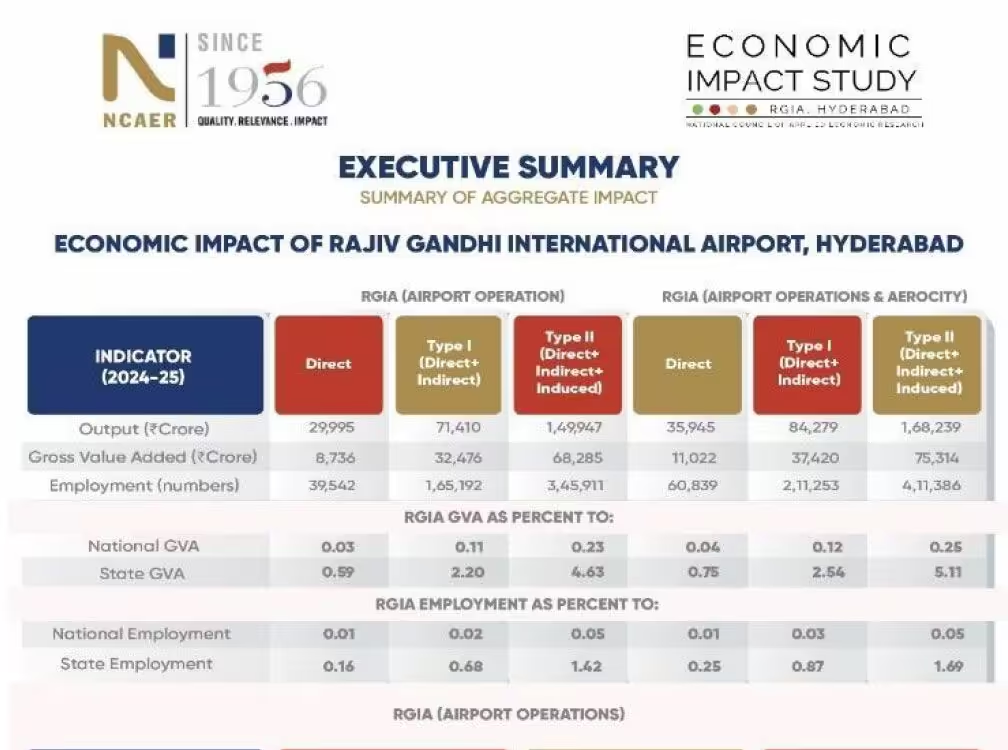
The NCAER Study 2024–25 highlights how Rajiv Gandhi International Airport (RGIA) has become a powerful growth engine for Telangana’s economy. Economic Contribution: - RGIA generates about ₹68,000 crore in Gross Value Added (GVA), equal to 4.6% of Telangana’s economy. - Supports 3.5 lakh jobs directly and indirectly. Direct Impact: - Airport operations alone contribute ₹30,000 crore in output, ₹9,000 crore in GVA, and 40,000+ jobs. Expanded Ecosystem: - With GMR Aerocity, the total impact rises to ₹75,000 crore in GVA and 4.1 lakh jobs, accounting for 0.25% of India’s GVA and over 5% of Telangana’s GVA. Future Projections (FY2037–38): - RGIA expected to generate ₹2.13 lakh crore in GVA and support nearly 9.8 lakh jobs. - Passenger traffic projected to reach 88.1 million annually, with a CAGR of 8.8% from FY25 to FY38. Strategic Role - Pharma & Exports: RGIA’s dedicated Pharma Zone makes Hyderabad a logistics hub for life sciences and time‑sensitive goods. - Connectivity: Currently serves 72 domestic and 24 international destinations, ranking 4th in India for unique city connections. - Resilience: Employment and cargo flows remained stable even during the pandemic, reinforcing RGIA’s role as a stabilizer. - Innovation: Deployment of a Digital Twin‑powered Airport Predictive Operations Centre (APOC) enhances operational foresight. Bigger Picture RGIA has evolved from a transport hub into a statewide economic catalyst, driving jobs, trade, investment, and global connectivity. With Aerocity’s integration, it is shaping Hyderabad into a global business and innovation hub, particularly in IT, pharma, and advanced manufacturing. This study positions RGIA not just as an airport, but as a long‑term economic engine for Telangana and India.
Follow us on Insta