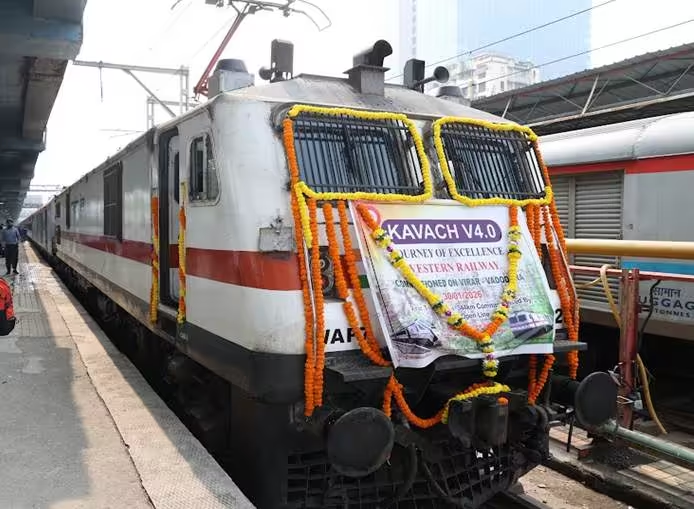
Indian Railways Speeds Up Kavach 4.0 Safety Rollout with 472 km Commissioned Across Three Sections
Indian Railways has achieved a major safety milestone by commissioning 472.3 km of its indigenous Kavach 4.0 Automatic Train Protection (ATP) system across three sections in a single day, bringing total coverage to over 1,300 km. This rollout strengthens collision prevention and operational safety on high-density routes. Key Highlights of Kavach 4.0 Rollout - Date of Commissioning: 30 January 2026 - Total Commissioned in One Day: 472.3 km (record for Indian Railways) - Total Coverage Now: 1,306.3 km across five zones Newly Commissioned Sections Vadodara–Virar | Western Railway | 344 km | Strengthens safety on the busy Mumbai–Delhi corridor Tuglakabad Junction Cabin–Palwal | Northern Railway | 35 km | Enhances safety in NCR region Manpur–Sarmatanr | East Central Railway | 93.3 km | Improves reliability on freight-heavy routes What is Kavach 4.0? - Indigenous ATP System: Designed by Indian Railways to prevent collisions and ensure speed regulation. - Technology Backbone: Uses microprocessors, GPS, and radio communication for real-time train monitoring. - Safety Features: - Automatic braking to prevent signal passing at danger (SPAD). - Collision avoidance through train-to-train communication. - Speed regulation based on track conditions. - Validated through successful head-on collision tests. First Trains Operated Under Kavach 4.0 - Dadar–Bhuj Sayajinagri Express: First Kavach-equipped train from Mumbai. - Sasaram Intercity Express: Inaugural service on East Central Railway section. Strategic Importance - Boosts Safety: Critical for high-density corridors like Delhi–Mumbai and Delhi–Howrah. - Scales Deployment: Surpassed previous record of 324 km (Kota–Mathura section). - Future Plans: Work on Vadodara–Nagda section expected by March 2026; Virar–Mumbai Central targeted for September 2026. In summary, Kavach 4.0’s rapid rollout marks a turning point in Indian Railways’ safety modernization, with record commissioning in January 2026 and ambitious expansion plans ahead. Would you like me to break down how Kavach compares with international ATP systems like ETCS (European Train Control System)? That could give a clearer picture of India’s global standing in rail safety tech.
Follow us on Insta